- Civil Nature of Unsecured Debt in Kerala: Under Indian jurisprudence and binding Kerala High Court precedents, loan default is strictly a civil breach of contract. Police officers possess zero legal authority to intervene, issue station summons, or threaten arrest for financial non-payment.
- Cross-Border NRI & Expat Settlement: Gulf returnees and NRIs across the UAE, Saudi Arabia, Qatar, Kuwait, and Oman can resolve pending unsecured loans in Kochi, Kozhikode, and Thiruvananthapuram through consular Special Power of Attorney without traveling to India.
- Ernakulam Magistrate Court Defense: Timely advocate replies within the mandatory 15-day window for Section 138 NI Act and Section 25 PSSA notices prevent coercive warrants across CJM Ernakulam, Aluva, and Kozhikode courts while steering lenders into compromise conciliation.
- MG Road SARB Haircut Slabs (40%–65%): Direct institutional negotiation with bank Zonal Stressed Asset Resolution Branches in Kochi unlocks substantial 40% to 65% principal write-offs and 100% penal fee waivers based on Net Present Value (NPV) recovery benchmarks.
- Mandatory ₹0 NDC within 30 Days: Under RBI Circular RBI/2023-24/60, commercial banks and NBFCs must deliver the final No Dues Certificate within 30 calendar days of settlement remittance or pay statutory compensation of ₹5,000 per day of delay.
Debt Resolution Across Kochi & Expat Hubs
Kochi stands as the undisputed commercial and financial capital of Kerala, anchoring the state's trade, maritime commerce, tourism, and high-growth technology ecosystems across Infopark Kakkanad, SmartCity, and the Willingdon Island logistics corridors. Over recent years, aggressive retail lending by leading private banks and non-banking financial companies (NBFCs) disbursed tens of thousands of unsecured personal loans, multi-card credit facilities, and instant digital personal credit lines to salaried IT professionals, marine executives, trading entrepreneurs, and Non-Resident Indian (NRI) families across Ernakulam, Thiruvananthapuram, and Kozhikode.
However, sudden macroeconomic volatility—including Gulf corporate restructuring, overseas employment contract terminations across the UAE and Saudi Arabia, local commercial business margin compression, severe family medical crises, and rising interest rates—has created acute debt distress for thousands of borrowers. When monthly cash flows fracture, borrowers quickly find themselves trapped in a severe debt spiral, where multiple equated monthly installments (EMIs) bounce simultaneously across multiple private lenders.
Faced with mounting delinquencies, private financial institutions routinely outsource distressed accounts to aggressive third-party collection agencies operating across Kochi, Aluva, and Thrissur. These collection agents deploy unlawful intimidation tactics: making continuous harassing phone calls outside prescribed banking hours, visiting corporate offices in Infopark, threatening family members in residential localities like Marine Drive, Panampilly Nagar, and Edappally, and issuing fraudulent police arrest warnings. Borrowers must recognize that such collection practices violate Reserve Bank of India directives and that structured legal remedies exist to achieve complete financial emancipation.
NPA Aging Architecture & Kerala High Court Civil Protections
To negotiate a substantial debt settlement in Kerala, a borrower must understand the regulatory mechanisms of the Reserve Bank of India's Prudential Norms on Income Recognition, Asset Classification and Provisioning (IRACP). Commercial banks and NBFCs do not negotiate meaningful compromise haircuts during the early stages of missed payments; substantial One-Time Settlements (OTS) become viable only as the loan progresses through statutory delinquency categories.
During the first 90 days of non-payment, an overdue loan is classified as a Special Mention Account (SMA-0 for 1–30 days, SMA-1 for 31–60 days, and SMA-2 for 61–90 days). Once delinquency crosses 90 consecutive days, the account is mandatorily classified as a Non-Performing Asset (NPA). At this stage, the bank is legally compelled to set aside regulatory capital provisions from its operational profits (ranging from 15% to 25% for Substandard assets, 40% to 100% for Doubtful assets, and 100% for Loss assets).
| Delinquency Stage | Overdue Duration | Bank Provisioning Burden | Recovery Strategy & Haircut Viability |
|---|---|---|---|
| SMA-0 & SMA-1 | 1 – 60 Days Overdue | Standard Capital Provision | Automated payment reminders, tele-calling pressure, NACH bounce penalties. Haircut settlements unavailable. |
| SMA-2 | 61 – 90 Days Overdue | Watchlist Provision | Pre-NPA demand notices issued, external collection escalation. Loan restructuring or tenure extension possible. |
| Substandard NPA | 91 – 365 Days Overdue | 15% – 25% Regulatory Provision | File transferred to Zonal SARB desks on MG Road. 35%–50% principal haircut becomes commercially feasible. |
| Doubtful (D1 / D2) | 1 – 3 Years Overdue | 40% – 100% Capital Provision | Lenders prioritize liquidity over prolonged litigation. Deep 50%–65% principal haircuts achievable. |
| Loss Asset | 3+ Years Overdue | 100% Written-off Balance | Fully written off on bank balance sheet. Maximum compromise settlements (up to 70% haircut) or Lok Adalat disposal. |
The Hon'ble High Court of Kerala has repeatedly affirmed in numerous landmark judgments that banking institutions and finance companies cannot deploy extra-judicial force, musclemen, or coercive intimidation to recover unsecured loans. Recovery of contractual debts must adhere strictly to statutory due process under civil law. The Kerala High Court has established that financial institutions bear direct vicarious liability for the illegal and intimidatory actions of their outsourced collection agencies.
Check Your Loan Settlement Options
Answer 2 quick questions to evaluate your settlement eligibility.
1. What type of loan do you want to settle?
Defending Legal Notices in Ernakulam CJM & Kerala Magistrate Courts
When monthly electronic National Automated Clearing House (NACH) auto-debits or post-dated cheques bounce due to insufficient funds, lending banks dispatch formal statutory legal notices. These notices are issued under Section 25 of the Payment and Settlement Systems Act, 2007 (PSSA) or Section 138 of the Negotiable Instruments Act, 1881, threatening criminal prosecution across Kerala's magistrate courts (predominantly before the Chief Judicial Magistrate Court Ernakulam, and JFCM Courts in Ernakulam, Aluva, Thiruvananthapuram, and Kozhikode).
Receiving a statutory legal notice demands strategic, professional legal defense rather than panic. Under the law, the borrower has a mandatory 15-day statutory window from the date of receipt to serve a formal legal response. Ignoring this notice allows the lender's empanelled lawyers to file a private criminal complaint (C.C.), leading to judicial summons and potential bailable warrants if left unrepresented.
An experienced debt defense advocate drafts an exhaustive legal reply within the 15-day window. The reply formally establishes: (a) The complete absence of fraudulent intent or criminal mens rea; (b) Substantive documentary evidence of involuntary economic distress (such as expat repatriation records, employment termination letters, or medical hospitalization records); (c) Substantive legal challenges against arbitrary penal compounding, illegal bounce charges, and unnotified fees; (d) A bona fide proposal for compromise resolution under RBI directives.
Placing this formal legal response on record fundamentally changes the bank's calculation. Because prosecuting a complaint through Kerala's overcrowded magistrate courts requires years of continuous advocate appearances, court fees, and witness testimonies, bank legal officers routinely prefer redirecting accounts with active legal replies to the Zonal Stressed Asset Resolution Branch or the National Lok Adalat for an expedited One-Time Settlement.
Banker's General Lien (Section 171) & Ring-Fencing Expat Liquidity
A critical legal hazard that distressed borrowers in Kerala must safeguard against is the Banker's Right of General Lien and Set-Off under Section 171 of the Indian Contract Act, 1872. This statutory doctrine grants a lending institution the legal right to unilaterally appropriate funds, debit balances, or freeze accounts across any savings account, current account, fixed deposit, NRE account, or salary account maintained within that exact same banking entity under the same Customer Identification File (CIF) or PAN.
For example, if a borrower defaults on an unsecured personal loan with HDFC Bank, ICICI Bank, Axis Bank, or State Bank of India in Kochi while maintaining an active corporate salary account or NRE savings in the same bank, the automated core banking system will sweep incoming salary credits or freeze liquid funds the moment an EMI defaults. This sudden seizure can leave a family completely unable to manage essential household sustenance, rent, children's education, or medical care.
However, this statutory right of set-off has strict legal boundaries: a lending bank has zero legal power to attach, freeze, or debit funds held in an independent third-party bank without obtaining a specific decree or interim attachment warrant from a competent Civil Court. Therefore, borrowers facing imminent default must immediately ring-fence their subsistence by redirecting their income and liquid savings to an independent scheduled commercial bank where no loan dues exist.
Personal Loan Settlement Roadmap in Kochi & Kerala
The visual roadmap below illustrates the end-to-end debt resolution lifecycle in Kerala—from initial delinquency and court notice defense in Ernakulam to anti-harassment protections, NRI representation, MG Road SARB negotiations, and final ₹0 No Dues Certificate delivery.
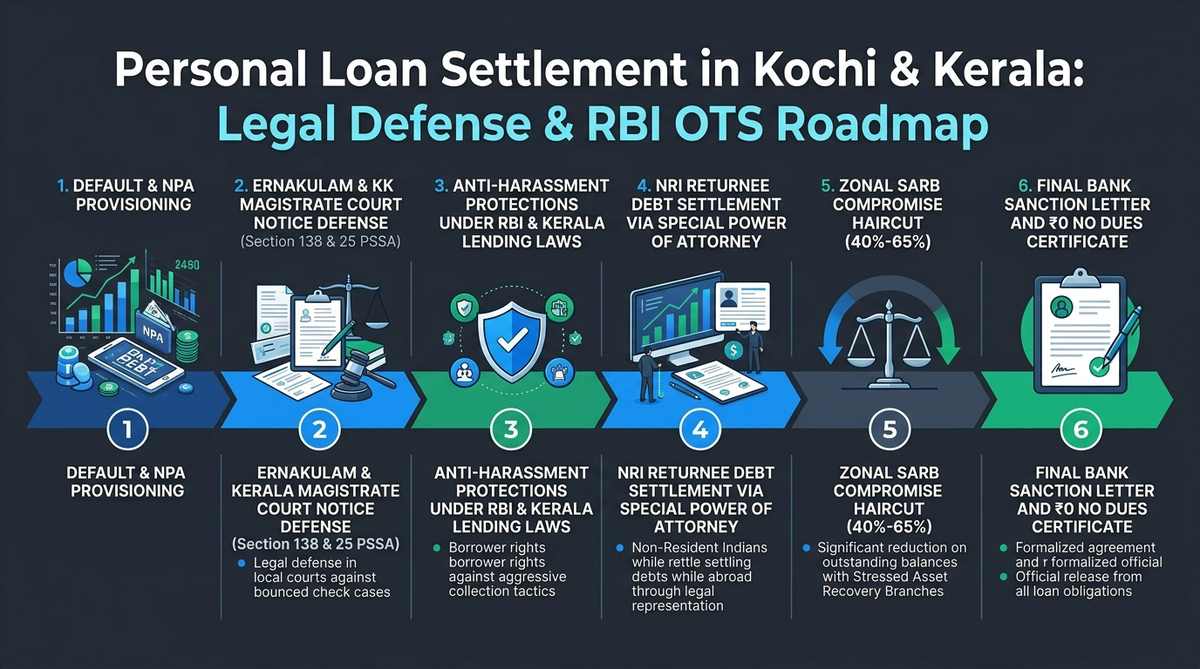
Figure 1.0: End-to-End Kerala Personal Loan Settlement Framework, Ernakulam Court Notice Defense & SARB Resolution Roadmap.
OTS Haircut Mechanics & The Net Present Value (NPV) Recovery Benchmark
Under the Reserve Bank of India's Master Directions on Resolution of Stressed Assets and board-approved compromise settlement policies, banks evaluate One-Time Settlement proposals through structured financial economics rather than emotional pleas. While third-party tele-callers claim that banks never offer discounts, Zonal Credit Committees along MG Road in Kochi evaluate every delinquent account against an institutional Net Present Value (NPV) Recovery Valuation Benchmark.
When an unsecured personal loan defaults, the lending bank faces substantial institutional friction. If the bank initiates civil recovery proceedings through an Order 37 summary suit in a Kerala Civil Court or approaches the Debts Recovery Tribunal (DRT at Panampilly Nagar for debts exceeding ₹20 Lakhs), it must incur significant ad-valorem court fees (1% to 3% of the claim), pay substantial senior advocate retainers, and endure 4 to 7 years of procedural delays. Furthermore, because unsecured loans lack hypothecated collateral, the final probability of cash recovery remains minimal.
Where C_t represents estimated recoveries, r is the discount rate, and deductions account for 3–5 years of court friction and capital locked in NPA provisions.
When a distressed borrower presents a prompt lump-sum or structured OTS payment through qualified legal advocates, the bank eliminates protracted litigation expenses, recovers liquid capital, and immediately writes back 100% of its locked regulatory provisions into its quarterly profit ledger. As a result of this commercial calculation, bank credit committees routinely approve compromise settlements granting 40% to 65% principal haircuts, along with complete 100% waivers of all accumulated penal interest, late fees, and bounce charges.
Enforcing the RBI Fair Practices Code & Kerala Anti-Harassment Protections
Borrowers facing aggressive debt recovery in Kerala are protected by a comprehensive framework of central banking regulations, state statutory protections, and High Court directives. The Reserve Bank of India Master Directions on Recovery Agents (2022) strictly define permissible collection conduct and impose severe regulatory sanctions on non-compliant financial institutions.
Under the RBI Fair Practices Code: (1) Recovery agents are strictly prohibited from contacting borrowers before 08:00 AM or after 07:00 PM; (2) Agents cannot use abusive language, threats of physical harm, or psychological intimidation; (3) Agents are strictly barred from contacting employers, HR managers, workplace colleagues, neighbours, or distant relatives; (4) Recovery personnel visiting a borrower's home must carry official bank authorization letters, display valid identity credentials, and respect personal privacy; (5) Continuous, repetitive calling designed to harass is an actionable regulatory offense.
Furthermore, under Kerala statutory jurisprudence and the Kerala Money-Lenders Act, 1958, coercive money collection, extortionate threats, and intimidation are strictly prohibited. The Kerala Police Department and the Cyber Crime Cell actively investigate unauthorized digital debt harassment and extortionate collection tactics.
When collection agencies breach these statutory boundaries, our legal advocates issue immediate formal cease-and-desist notices to the lending bank's Board of Directors and Principal Nodal Officer, while simultaneously filing complaints with the Kochi City Police Commissionerate, the Cyber Crime Cell, and the RBI Integrated Ombudsman Portal (CMS). Faced with severe regulatory penalties and potential RBI audit exposure, banks quickly instruct their collection agencies to halt all direct contact.
Remote Debt Resolution for Gulf Returnees & NRIs via Special Power of Attorney
A uniquely significant proportion of distressed retail debt in Kerala involves Non-Resident Indians (NRIs) residing in the United Arab Emirates (Dubai, Abu Dhabi, Sharjah), Saudi Arabia (Riyadh, Jeddah), Qatar (Doha), Oman, Kuwait, and Bahrain, as well as expatriates who have recently returned to Kerala following job terminations or business closures. Many NRI borrowers maintain legacy personal loans, credit card balances, or business credit lines in Kerala while living abroad.
When financial emergencies occur overseas, managing Indian bank defaults becomes extremely complex. Recovery agencies frequently harass elderly parents or relatives residing in Kerala, while unauthorized tele-callers make misleading threats regarding airport immigration holds, passport cancellation, or Interpol notices. Under Indian law, no Look Out Circular (LOC) or immigration hold can be issued for ordinary civil personal loan default in the absence of a proven criminal economic fraud warrant issued by a competent court.
Non-Resident Indians do not need to travel to India to settle their liabilities. Under the Powers of Attorney Act, 1882, an NRI can execute a Special Power of Attorney (PoA) attested by the Indian Embassy or Consulate in their country of residence. This document formally authorizes our senior debt settlement advocates in Kerala to represent the borrower directly before bank SARB committees, magistrate courts, and Lok Adalat conciliation benches in Kochi, Kozhikode, and Thiruvananthapuram.
Our advocates negotiate maximum OTS debt waivers, audit the final settlement terms, and oversee direct payment from the borrower's NRE or NRO banking account into the loan account, securing an authentic, stamped ₹0 No Dues Certificate and complete legal closure without the NRI having to leave their overseas employment.
Sanction Letter Forensics, Mandatory ₹0 NDC & 24-Month CIBIL Reconstruction
One of the most dangerous hazards for distressed borrowers in Kerala is remitting funds based on verbal promises, SMS notifications, or informal WhatsApp settlement letters sent by third-party recovery callers. Fraudulent agents frequently persuade borrowers to deposit an ad-hoc token payment, only for the funds to be absorbed into accumulated penal interest while the loan remains active and compounding.
Before releasing any settlement funds, our legal advocates verify five non-negotiable forensic criteria in the bank's OTS Sanction Letter: (1) It must be issued on official bank letterhead with digital signatures and employee codes; (2) It must clearly state the exact loan account number and compromised settlement amount; (3) It must define a clear payment schedule (lump-sum or structured tranches); (4) It must contain an unambiguous debt extinguishment clause confirming that upon payment, all remaining dues stand fully waived with termination of legal proceedings; (5) It must mandate the issuance of a formal ₹0 No Dues Certificate.
Under RBI Circular RBI/2023-24/60, all regulated lenders are legally mandated to release the official No Dues Certificate (NDC) / Loan Closure Certificate and update credit bureau records within 30 calendar days of receiving full settlement payment. If the bank fails to deliver the NDC within 30 days due to administrative delay, it is statutorily liable to pay mandatory compensation of ₹5,000 for each day of delay directly to the borrower.
Following settlement, the bank reports the account status across all four credit bureaus (CIBIL, Experian, Equifax, CRIF High Mark) as 'Settled' or 'Post-Write-off Settled' with an outstanding balance of ₹0. While this causes a temporary credit score drop and triggers an RBI-mandated 12-month cooling period, it permanently halts open delinquency compounding. Borrowers can systematically rebuild their CIBIL score back to 750+ within 18 to 24 months through disciplined credit repair strategies, such as utilizing secured fixed-deposit credit cards and maintaining credit utilization below 30%.
Comparing Debt Resolution Pathways for Borrowers in Kerala
Evaluating all available legal and financial debt resolution avenues in Kerala helps borrowers select the optimal strategy based on debt quantum, financial capacity, and speed of execution:
| Resolution Pathway | Principal Haircut Range | Legal Binding Finality | CIBIL Bureau Status | Resolution Timeline |
|---|---|---|---|---|
| Direct SARB Settlement (MG Road Kochi) | 40% – 65% Principal Haircut | Complete (Bank NDC Issued) | 'Settled' / ₹0 Dues | 3 to 6 Weeks |
| Kerala Lok Adalat (KELSA / DLSA) | 45% – 65% Principal Haircut | Absolute (Civil Court Decree) | 'Settled' / ₹0 Dues | Quarterly Lok Adalat Cycles |
| Bank Loan Restructuring | 0% Haircut (Tenure Extension) | Conditional on Monthly EMI | 'Restructured' / Active Debt | 2 to 4 Weeks |
| Civil Court Litigation (Ernakulam/HC) | Uncertain (Judicial Discretion) | Subject to Multi-Year Appeal | 'Suit Filed' / Compounding | 4 to 7 Years |
Premier Loan Settlement & Legal Defense Services in Kochi & Kerala
Navigating unpayable unsecured debt across Kochi and Kerala requires assertive advocate representation to halt collection agency harassment, defend statutory notices in Ernakulam Magistrate Courts, protect overseas NRI interests, and negotiate directly with bank Zonal Credit Committees for maximum debt relief. SettleLoans provides end-to-end legal and financial advocacy to help borrowers across Kerala reclaim their financial sovereignty.

Settle Loan is India's trusted debt relief and loan settlement platform. We help borrowers overcome financial distress by negotiating with banks and NBFCs to legally settle personal loans and credit card debts. With our transparent, performance-based approach, you can achieve debt freedom and regain your financial peace of mind.
COMPUTER
Frequently Asked Questions on Personal Loan Settlement in Kochi & Kerala
How does personal loan settlement work in Kochi and Kerala?
Personal loan settlement in Kochi is a formal compromise resolution between a distressed borrower and a regulated lending institution under Reserve Bank of India Master Directions. When an unsecured personal loan or credit card defaults past 90 days into Non-Performing Asset (NPA) status, the file moves from branch recovery teams to the Stressed Asset Resolution Branch (SARB) or Zonal Settlement Committee along MG Road, Ravipuram, or Marine Drive in Kochi. With advocate representation, the borrower submits a comprehensive financial hardship dossier. Upon committee approval, an official OTS Sanction Letter is issued providing a 40% to 65% principal haircut and 100% waiver of penal interest, followed by payment and issuance of a ₹0 No Dues Certificate.
Can Gulf returnees (NRIs) settle personal loans in Kerala without traveling to India?
Yes. Non-Resident Indians (NRIs) and Gulf returnees residing in the UAE, Saudi Arabia, Qatar, Oman, Kuwait, or Bahrain can execute an Indian Embassy or Consular-attested Special Power of Attorney (PoA) appointing a dedicated debt settlement advocate in Kerala. The advocate appears before bank SARB committees and judicial forums in Kochi, Kozhikode, or Thiruvananthapuram, negotiates the settlement, and completes full debt closure through legal NRE or NRO remittance channels without the NRI needing to travel to India.
Which local courts handle loan default litigation in Kochi and Kerala?
In Kochi and Ernakulam district, Section 138 NI Act cheque bounce matters and Section 25 PSSA complaints are adjudicated before the Chief Judicial Magistrate (CJM) Court Ernakulam and Judicial First Class Magistrate (JFCM) Courts at Ernakulam and Aluva. Civil summary suits under Order 37 CPC are heard at District and Subordinate Courts. High-value corporate and banking recovery claims exceeding ₹20 Lakhs fall under the jurisdiction of the Debts Recovery Tribunal (DRT-1 and DRT-2 Ernakulam at Panampilly Nagar). The High Court of Kerala provides constitutional oversight against unlawful coercive actions.
What percentage of debt waiver or haircut can borrowers in Kerala negotiate?
Borrowers in Kochi and Kerala typically achieve principal haircuts between 40% and 65% on unsecured personal loans and credit cards. The haircut quantum depends on the NPA classification aging (Substandard, Doubtful D1/D2, or Loss Asset), the bank's regulatory provisioning burden (ranging from 15% up to 100%), and verifiable proof of involuntary hardship (such as expat repatriation, job loss, or enterprise downturn). In all RBI-compliant settlements, 100% of accumulated penal interest, late fees, and bounce charges are fully waived.
How do debt settlement advocates protect borrowers from recovery agent harassment in Kerala?
Advocates issue formal statutory cease-and-desist notices to bank Principal Nodal Officers citing the RBI Master Directions on Recovery Agents (2022) and Kerala High Court civil liberty precedents. If third-party recovery agents make threatening phone calls, visit workplaces in Infopark, or intimidate family members, advocates escalate complaints to the Kochi City Police Commissionerate, the Cyber Crime Cell, and the RBI Integrated Ombudsman Portal (CMS), compelling banks to withdraw aggressive collection personnel.
How are Section 138 NI Act and Section 25 PSSA notices defended in Ernakulam courts?
When NACH mandates or cheques bounce, banks issue statutory 15-day notices under Section 25 PSSA or Section 138 NI Act. Debt defense advocates draft an exhaustive legal reply within the mandatory 15-day window. The reply disproves fraudulent intent (mens rea), substantiates genuine involuntary hardship, challenges illegal compounding levies, and offers a bona fide compromise settlement proposal, redirecting the bank from criminal litigation to SARB conciliation or Lok Adalat.
Can defaulted loans be resolved through KELSA National Lok Adalat in Kerala?
Yes. The Kerala State Legal Services Authority (KELSA) and District Legal Services Authorities (DLSA Ernakulam, Thiruvananthapuram, and Kozhikode) conduct quarterly National Lok Adalats. Banks routinely submit delinquent unsecured loan portfolios to Lok Adalat conciliation benches. Bank officers attend with pre-approved settlement mandates, allowing borrowers to secure 45% to 65% haircuts. An award passed by the Lok Adalat holds the status of a final Civil Court Decree with zero court fees and no appealability.
What is the mandatory timeline for banks to issue a No Dues Certificate under RBI rules?
Under RBI Circular RBI/2023-24/60, all regulated commercial banks and NBFCs must release the official ₹0 No Dues Certificate (NDC) / Loan Closure Certificate and update credit bureau records across CIBIL, Experian, Equifax, and CRIF High Mark within 30 calendar days of receiving full settlement payment. If a lender fails to issue the NDC within 30 days without valid justification, it must pay mandatory statutory compensation of ₹5,000 per day of delay directly to the borrower.
How can a bank's Section 171 Banker's General Lien freeze operational funds in Kerala?
Under Section 171 of the Indian Contract Act, a lending bank has the statutory right of general lien and set-off to freeze or debit funds from any savings, current, or salary account maintained within that exact same banking institution under the same PAN. However, the bank cannot touch funds held in independent third-party banks without a specific Civil Court attachment order. Borrowers anticipating default must immediately ring-fence their subsistence by opening an operational account in an independent bank where no loan liabilities exist.
How does personal loan settlement affect CIBIL scores and future credit rehabilitation in Kerala?
Following settlement, the bank reports the account to credit bureaus as 'Settled' or 'Post-Write-off Settled' with a ₹0 balance. This permanently halts open delinquency compounding but causes an initial credit score drop of 75 to 150 points and triggers an RBI-mandated 12-month cooling period for unsecured credit. With all active defaults extinguished, borrowers can systematically rehabilitate their credit score back to 750+ within 18 to 24 months through disciplined usage of secured fixed-deposit credit cards.