- Strict Calling Window: RBI Master Directions prohibit collection calls, IVR dialers, texts, and visits outside 8:00 AM to 7:00 PM. Calls after 7:00 PM are direct regulatory offenses.
- Lender Liability: Regulated banks and NBFCs remain directly liable for recovery agent misconduct under Section 47A Banking Regulation Act penalties.
- Evidence Admissibility: Timestamped call detail records, screenshots, and audio recordings are admissible under Sections 61–63 of Bharatiya Sakshya Adhiniyam, 2023.
- Criminal Protections: Abusive nocturnal calls trigger criminal penalties under Sections 351(2), 352, and 79 of the Bharatiya Nyaya Sanhita, 2023.
- Advocate Intervention: Cease-and-desist notices to Principal Nodal Officers halt illegal calling and open paths to negotiated One-Time Settlements (OTS).
1. Strict RBI Prohibition on Calling After 7 PM
The rapid expansion of retail credit in India has brought aggressive collection methods by outsourced recovery agencies. To protect borrowers, the Reserve Bank of India (RBI) established strict operating rules in its Master Direction on Outsourcing of Financial Services. These directions apply to commercial banks, small finance lenders, and NBFCs nationwide.
Under these mandatory directives, customer contact for loan recovery is strictly limited to between 08:00 and 19:00 hours (8:00 AM to 7:00 PM) local time. This rule covers phone calls, automated IVR dialers, SMS alerts, WhatsApp messages, and home visits. Initiating contact at 7:01 PM or 7:59 AM is a direct breach of statutory banking compliance designed to safeguard domestic peace and borrower privacy.
Borrowers possess statutory immunity from collection contact between 7:00 PM and 8:00 AM. Any contact during these hours is presumed unlawful under RBI Master Directions, shifting the legal burden of proof to the lender.
2. Constitutional Privacy and Civil Law Protections
Beyond banking guidelines, protection against after-hours debt harassment is rooted in constitutional law. Article 21 of the Constitution of India guarantees the fundamental Right to Life and Personal Liberty. In Justice K.S. Puttaswamy v. Union of India (2017), the Supreme Court held that privacy in one's home is an essential part of Article 21. This built upon ICICI Bank Ltd. v. Prakash Kaur (2007), where the apex court barred lenders from using musclemen or intimidation to recover dues.
When agents call after 7:00 PM, their conduct often breaches the Bharatiya Nyaya Sanhita, 2023 (BNS). Threatening arrest over an unpaid loan violates Section 351(2) BNS for criminal intimidation. Shouting vulgar insults triggers Section 352 BNS for provoking breach of peace, while harassing female borrowers invokes Section 79 BNS. These offenses expose telecallers and agency supervisors to immediate police complaints.
Check Your Loan Settlement Options
Answer 2 quick questions to evaluate your settlement eligibility.
1. What type of loan do you want to settle?
3. Timestamped Call Logs and Digital Evidence Standards
Banks and collection agencies often deny after-hours calling unless presented with clear electronic proof. To enforce your rights, you must document incoming calls systematically. Never delete after-hours call entries. Capture device screenshots showing the incoming caller ID, date, exact timestamp, and carrier status bar.
Request an itemized Call Detail Record (CDR) from your telecom provider (Jio, Airtel, or Vi) for independent corroboration. Under Sections 61, 62, and 63 of the Bharatiya Sakshya Adhiniyam, 2023 (BSA), recorded voice audio and digital call logs with device metadata are admissible before the RBI Ombudsman, consumer commissions, and civil courts.
4. Lender Vicarious Liability and Monetary RBI Fines
Lenders cannot avoid legal responsibility by claiming recovery agencies are independent contractors. Under the doctrine of vicarious liability—and Paragraph 12 of the RBI Master Direction on Outsourcing—banks and NBFCs remain directly responsible for the actions of their collection agents. The principal answers for wrongful acts committed by its agents during debt recovery.
Under Section 47A of the Banking Regulation Act, 1949, the RBI holds statutory power to impose multi-crore fines on lenders violating conduct standards. The central bank can also suspend recovery contracts, conduct supervisory audits, and limit loan onboarding. Documented after-hours calls create serious institutional exposure that far outweighs the unpaid loan balance.
5. Recovery Calling Hours Regulatory Infographic
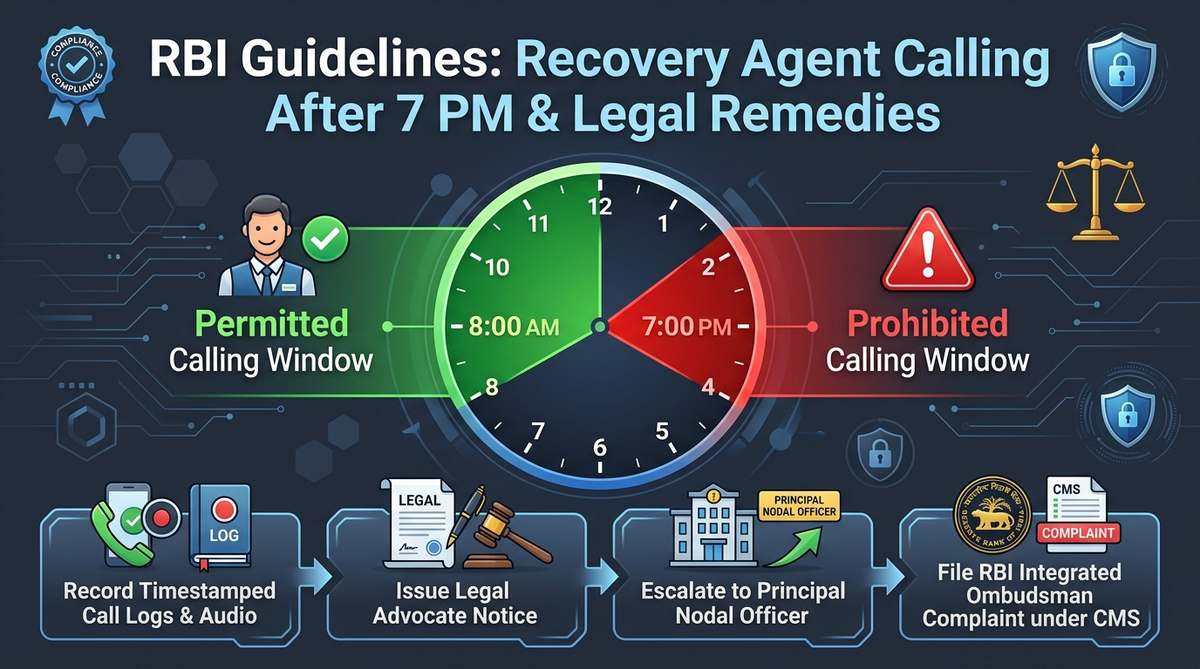
Figure 1: Statutory framework governing permissible loan recovery calling windows (8:00 AM to 7:00 PM), prohibited nocturnal collection zones, and the 4-stage escalation workflow under Reserve Bank of India regulations.
6. Issuing a Formal Advocate Cease-and-Desist Notice
Frontline agency telecallers rarely heed verbal protests because their incentives depend on monthly collection targets. Stopping after-hours calls permanently requires a formal Advocate Cease-and-Desist Notice served on the bank's Managing Director and Principal Nodal Officer (PNO) via registered Speed Post and email.
The notice details the exact call timestamps, cites RBI Master Directions and BNS provisions, and formalizes legal representation under the Advocates Act, 1961. It directs the lender to recall external agencies and route all future communications exclusively through legal counsel. In over 95% of SettleLoans matters, this freezes agency calling within 48 to 72 hours.
7. Bank Provisioning Burden and NPV Recovery Calculus
When an unsecured retail loan crosses 90 days overdue, it becomes a Non-Performing Asset (NPA) under RBI IRACP norms. This requires banks to stop recognizing interest income and allocate mandatory capital provisions from operating profits—starting at 15% to 25% and rising to 100% over time. Bank credit committees evaluate settlements against prolonged recovery friction using Net Present Value (NPV):
Where C_t represents estimated recoveries, r is the discount rate, and deductions account for 3–5 years of court friction and capital locked in NPA provisions.
Litigation under Order 37 CPC or Section 138 NI Act takes 3 to 5 years, incurring heavy legal retainers and locking capital. When an advocate proves recovery agents violated RBI calling hours, the bank's risk escalates. To avoid Ombudsman sanctions, lenders routinely accept a One-Time Settlement (OTS), waiving 40% to 65% of outstanding dues.
8. Escalating Harassment to the RBI CMS Ombudsman
If a lender fails to resolve an after-hours harassment complaint within 30 days, borrowers can escalate the matter under the Reserve Bank – Integrated Ombudsman Scheme (RB-IOS), 2021 via the CMS portal at cms.rbi.org.in. File under "Deficiency in Service – Violation of Recovery Agent Guidelines."
Upload your initial PNO grievance, proof of non-resolution, call log screenshots, telecom CDR, and advocate notice. Under Clause 15 of RB-IOS 2021, the Ombudsman can award compensation up to ₹20 lakhs for direct loss and up to ₹1 lakh for mental harassment. Lenders facing an Ombudsman inquiry usually move quickly to offer a clean settlement.
9. Comparative Debt Collection Enforcement Matrix
Knowing the legal boundaries of debt collection empowers borrowers to counter intimidation. The table below outlines permitted hours, prohibited acts, legal violations, and prescribed remedies across collection channels:
| Collection Modality | Permitted Hours | Prohibited Conduct Under RBI Rules | Statutory Violations Triggered | Prescribed Borrower Countermeasures |
|---|---|---|---|---|
| Telephone Voice Calls & IVR Dialers | 08:00 AM to 07:00 PM only. | Calling after 7:00 PM, repetitive calling, spoofed numbers, verbal abuse. | RBI Outsourcing Circular; Sec 351(2), 352 BNS; TRAI Regulations. | Preserve call logs, telecom CDR, serve Advocate Notice, file RBI complaint. |
| WhatsApp & SMS Messaging | 08:00 AM to 07:00 PM only. | Late-night broadcasts, abusive texts, sharing debt details with third parties. | DPDP Act 2023; Sec 79, 356 BNS; Information Technology Act. | Export certified chat transcripts, block sender, issue notice for data breach. |
| Physical Doorstep Home Visits | 08:00 AM to 07:00 PM only. | Visits after 7:00 PM, failing to show DRA card, forced home entry. | Sec 329 BNS (Criminal Trespass); Prakash Kaur ruling; Art. 21. | Keep doors locked, demand DRA credentials, record video, dial 112. |
| Contacting Workplace & HR | Strictly prohibited always. | Calling employers, office visits, discussing dues with managers or peers. | Article 21 Privacy (Puttaswamy); Sec 356 BNS (Defamation). | Serve Cease-and-Desist Notice, file injunction suit for damages. |
| Civil Court Process & Summons | Official court hours only. | Fake WhatsApp summons, forged arrest warrants, police threat notices. | Sec 318, 336 BNS (Cheating & Forgery); Contempt of Courts Act. | Verify on e-Courts portal, report forgery to Bar Council and Magistrate. |
10. SettleLoans Legal Shield and Debt Resolution
Borrowers should never suffer after-hours harassment or threats over personal loans, business debt, or credit card balances. At SettleLoans, our senior banking litigators protect distressed borrowers across India.
Our advocates serve Vakalatnama notices, Address Update Mandates, and Cease-and-Desist directives to bank nodal executives. We document regulatory violations and negotiate directly with credit risk committees to secure formal One-Time Settlements (OTS) with 40% to 65% waivers and official No Dues Certificates (NDC).

Settle Loan is India's trusted debt relief and loan settlement platform. We help borrowers overcome financial distress by negotiating with banks and NBFCs to legally settle personal loans and credit card debts. With our transparent, performance-based approach, you can achieve debt freedom and regain your financial peace of mind.
COMPUTER
11. Frequently Asked Questions on Calling Rules
Clear answers on RBI recovery agent calling hours, evidence preservation under BSA 2023, and institutional debt settlement remedies.
Is it illegal for a recovery agent to call me after 7:00 PM in India?
Yes. The RBI Master Direction on Outsourcing of Financial Services strictly restricts collection calls and visits to between 8:00 AM and 7:00 PM. Any call placed after 7:00 PM is a direct regulatory violation reportable to the bank's Principal Nodal Officer and the RBI Integrated Ombudsman.
What should I say when a recovery agent calls me late in the evening?
State clearly: 'Under RBI Master Directions, calling borrowers after 7:00 PM is illegal. This call is being recorded for regulatory and legal evidence. State your full name, employee ID, agency, and lending bank, and cease calling outside permitted hours.' Then end the call and preserve screenshots.
How do I ensure call recordings are legally admissible as evidence?
Under Sections 61–63 of the Bharatiya Sakshya Adhiniyam, 2023 (BSA), digital voice recordings and call logs are admissible. Retain original audio files on your device, capture unedited screenshots with timestamps, and request an itemized Call Detail Record (CDR) from your telecom operator.
Can I file a police complaint or FIR if recovery agents call late at night?
Yes. If an agent threatens harm, uses vulgar language, or intimidates your family, you can file a police complaint under Section 351(2) BNS (Criminal Intimidation), Section 352 BNS (Intentional Insult to Provoke Breach of Peace), and Section 79 BNS if female family members are targeted.
Can the lending bank be penalized for the illegal actions of its recovery agency?
Yes. Under the doctrine of vicarious liability and RBI guidelines, banks and NBFCs remain strictly liable for outsourced recovery agent conduct. Under Section 47A of the Banking Regulation Act, the RBI can impose multi-crore fines and suspend recovery operations.
How does a formal legal notice from an advocate stop late-night calling?
An advocate cease-and-desist notice served on the bank's Managing Director and Principal Nodal Officer documents illegal call timestamps. It requires all collection calls to stop and directs that communications proceed exclusively through your legal counsel, halting calls within 48 to 72 hours.
What compensation can borrowers claim under the RBI Integrated Ombudsman Scheme?
Under the RBI Integrated Ombudsman Scheme, 2021, the Ombudsman can award up to ₹20 lakhs for direct financial loss resulting from service deficiencies and up to ₹1 lakh for mental agony, harassment, and loss of time.
Can recovery agents call my workplace or employer after 7:00 PM?
No. Recovery agents are strictly prohibited from contacting your employer, office HR, or colleagues at any time. Doing so violates Article 21 constitutional privacy rights and constitutes actionable defamation under Section 356 of the Bharatiya Nyaya Sanhita, 2023.
Does proving an RBI calling hours violation help in negotiating a loan settlement?
Yes. Documented evidence of regulatory violations gives you significant negotiation leverage. To avoid Ombudsman penalties and reputational risk, banks become far more receptive to an official One-Time Settlement (OTS) with a 40% to 65% waiver to close the dispute cleanly.