- Civil Character of Loan Default in UP: Under Indian contract law and established Allahabad High Court jurisprudence, loan default is purely a civil contractual dispute. Local police stations have zero jurisdiction to detain, summon, or register criminal FIRs against borrowers for financial distress.
- State & Corporate Salary Protection: Under Section 60(1) of the Code of Civil Procedure (CPC) and Section 171 Contract Act doctrines, public sector and corporate salary accounts are shielded from arbitrary banker attachment when routed to separate banking institutions.
- Kaisarbagh District Court & Section 138 Defense: Serving a timely legal reply within 15 days of receiving cheque or NACH bounce notices neutralizes criminal exposure in Lucknow Magistrate Courts and compels banks to enter formal compromise conciliation.
- Zonal SARB Haircut Slabs (40%–70%): Negotiating directly with bank Zonal Stressed Assets Recovery Branches in Hazratganj, Vibhuti Khand, and Kanpur Mall Road unlocks 40% to 70% principal waivers and 100% penal interest write-offs.
- Mandatory ₹0 NDC within 30 Days: Under RBI Circular RBI/2023-24/60, lenders must issue the official zero-balance No Dues Certificate within 30 days of settlement remittance or pay mandatory compensation of ₹5,000 per day of delay.
The Unsecured Debt Challenge for Salaried Government
As the administrative, judicial, and financial capital of Uttar Pradesh, Lucknow represents a unique socio-economic landscape. The city houses the state civil administration centered around the UP Government Secretariat (Bapu Bhawan and Sachivalaya), the Vidhan Sabha, state public sector undertakings such as UP Power Corporation Limited (UPPCL) and UP State Road Transport Corporation (UPSRTC), premier healthcare establishments (KGMU, Sanjay Gandhi PGIMS, and Ram Manohar Lohia Institute), central government organizations like RDSO and HAL, alongside a rapidly expanding IT and financial corporate corridor across Gomti Nagar, Vibhuti Khand, and Amar Shaheed Path. In close proximity, the neighboring industrial hub of Kanpur supports thousands of commercial enterprises, MSME supply vendors, and trading establishments.
Over the preceding five years, aggressive retail credit expansion by major Public Sector Undertaking (PSU) banks (including State Bank of India, Punjab National Bank, Bank of Baroda, Canara Bank, and Union Bank of India) and private commercial lenders (such as HDFC Bank, ICICI Bank, Axis Bank, and Kotak Mahindra Bank), supplemented by non-banking financial companies (NBFCs) like Bajaj Finance and Tata Capital, led to widespread disbursement of unsecured personal loans, consumer durables credit, and instant revolving credit lines.
However, sudden involuntary distress—triggered by unanticipated private corporate downsizings, business supply-chain interruptions across Kanpur and Lucknow trading corridors, personal health crises, or post-retirement family obligations—has severely compromised the monthly debt-servicing capacity of thousands of families. When cash liquidity contracts, borrowers face multiple simultaneous equated monthly installment (EMI) defaults. In response, financial institutions frequently assign delinquent portfolios to aggressive third-party recovery agencies operating across Hazratganj, Aminabad, and Kanpur.
These recovery agencies routinely deploy coercive and unlawful collection tactics: persistent telephonic harassment outside permissible hours, threats of workplace disclosure in government offices and corporate parks, unannounced visits to residential colonies in Aliganj, Indira Nagar, Ashiyana, and Gomti Nagar, and intimidation regarding imminent police arrests. Distressed borrowers must understand that such intimidatory practices directly violate Reserve Bank of India directives, and established legal procedures exist to permanently halt harassment and achieve substantial debt reduction through structured compromise settlements.
NPA Classification Aging & Allahabad High Court Civil Debt Safeguards
Navigating an optimal personal loan settlement in Lucknow requires an in-depth understanding of the Reserve Bank of India's Prudential Norms on Income Recognition, Asset Classification and Provisioning (IRACP). Commercial banks and financial institutions do not enter into deep debt compromise negotiations during the initial days of non-payment. Meaningful One-Time Settlement (OTS) terms become viable as the delinquent account advances across standardized statutory aging classifications.
During the first 90 days of overdue status, the account is categorized as a Special Mention Account (SMA-0 for 1–30 days, SMA-1 for 31–60 days, and SMA-2 for 61–90 days). Once the overdue duration crosses the 90-day threshold without clearance, the lending institution is mandated under RBI regulations to classify the account as a Non-Performing Asset (NPA). Upon NPA classification, the bank must set aside statutory capital provisions from its operational profits (ranging from 15% to 25% for Substandard assets, 40% to 100% for Doubtful assets, and 100% for Loss assets).
| Delinquency Stage | Aging Threshold | Mandatory Provisioning | Institutional Strategy & OTS Haircut Scope |
|---|---|---|---|
| SMA-0 & SMA-1 | 1 – 60 Days Overdue | Standard Capital Buffer | Automated SMS notices, collection calling, mandate bounce fees. Substantive debt waivers unavailable. |
| SMA-2 | 61 – 90 Days Overdue | Pre-NPA Watchlist | Pre-NPA demand notices issued, recovery agency escalation. EMI restructuring or tenure extension possible. |
| Substandard NPA | 91 – 365 Days Overdue | 15% – 25% Profit Provision | Account transferred to Zonal SARB desks in Hazratganj/Vibhuti Khand. 35%–50% principal haircuts become viable. |
| Doubtful (D1 / D2) | 1 – 3 Years Overdue | 40% – 100% Capital Lock | Lenders prioritize balance sheet cleanup over legal delays. 50%–65% principal haircuts achievable. |
| Loss Asset | 3+ Years Overdue | 100% Written-off Balance | Account fully written off in institutional books. Deep One-Time Settlements (up to 70% haircut) via Lok Adalat. |
The Hon'ble Allahabad High Court and its Lucknow Bench have consistently held across numerous authoritative judgments that financial institutions cannot adopt coercive, strong-arm, or extra-judicial measures for loan recovery. The court has repeatedly ruled that banks and NBFCs are vicariously liable for unlawful conduct, criminal intimidation, or harassment committed by their recovery agents, affirming that debt recovery must strictly follow established civil due process.
Check Your Loan Settlement Options
Answer 2 quick questions to evaluate your settlement eligibility.
1. What type of loan do you want to settle?
Defending Legal Notices in Lucknow District Court (Kaisarbagh) & CJM Courts
When electronic National Automated Clearing House (NACH) mandates or physical post-dated cheques bounce due to insufficient balances, bank legal departments issue formal statutory notices. These notices are dispatched under Section 25 of the Payment and Settlement Systems Act, 2007 (PSSA) or Section 138 of the Negotiable Instruments Act, 1881, warning of criminal complaint proceedings across Lucknow's judicial magistrate courts seated at the District Court Complex in Kaisarbagh and Kanpur Nagar courts.
Receiving a statutory legal notice demands prompt, professional advocate intervention. Under the law, a borrower is entitled to a mandatory 15-day statutory response window from the date of service. Disregarding a statutory notice allows the lender to file a formal complaint under Section 142 of the NI Act, resulting in judicial summons and potential bailable warrants if left unrepresented.
A seasoned debt defense advocate drafts a comprehensive legal reply within the 15-day window. The reply formally places on record: (a) The complete absence of dishonest intent or fraudulent mens rea at loan inception; (b) Documented proof of involuntary financial hardship (such as medical records, salary reductions, corporate layoff documentation, or certified business balance sheets); (c) Substantive legal objections challenging inflated compound interest, unnotified penalty levies, and unlawful bounce charges; (d) A bona fide proposal for amicable compromise resolution under RBI master guidelines.
Placing an assertive legal defense on record fundamentally alters the bank's recovery calculus. Because prosecuting a complaint through crowded magistrate courts in Kaisarbagh entails years of procedural hearings, advocate fees, and witness testimonies, bank legal officers routinely prefer directing accounts with structured advocate replies toward the Zonal Stressed Assets Recovery Branch or the National Lok Adalat for an expedited compromise settlement.
Banker's Right of General Lien (Section 171) & Salary Account Protection
A primary operational threat for salaried professionals and government personnel in Lucknow is the Banker's Right of General Lien and Set-Off under Section 171 of the Indian Contract Act, 1872. This statutory provision allows a lending bank to unilaterally debit funds, freeze balances, or appropriate credits from any savings account, fixed deposit, or salary account maintained within that exact same banking institution under the matching Customer Information File (CIF) or PAN.
For example, if a borrower defaults on an unsecured personal loan with State Bank of India, Punjab National Bank, or HDFC Bank while maintaining their active UP Cyber Treasury salary account or operational savings with the same institution, the bank's core banking system can automatically sweep incoming salary credits upon an EMI default. This sudden appropriation can leave a family without essential funds for food, rent, utility bills, or emergency medical care.
However, this right of set-off possesses definitive legal boundaries: a lending bank cannot attach, freeze, or appropriate monies deposited in separate, independent banking institutions without obtaining a formal decree or interim attachment warrant from a competent Civil Court. Moreover, under Section 60(1)(i) and 60(1)(l) of the Code of Civil Procedure (CPC), 1908, statutory salary attachment exemptions strictly protect subsistence income, mandatory allowances, and provident fund accumulations from civil execution.
Borrowers facing imminent default must immediately ring-fence their monthly subsistence by updating their employer payroll records to an independent bank where they have no existing credit liabilities and revoking standing NACH electronic mandates.
Personal Loan Settlement Roadmap in Lucknow & Uttar Pradesh
The visual roadmap below details the complete stage-by-stage debt resolution lifecycle in Lucknow—from financial distress audit and Kaisarbagh court notice defense to RBI anti-harassment shielding, Zonal SARB negotiations, and final ₹0 No Dues Certificate delivery.
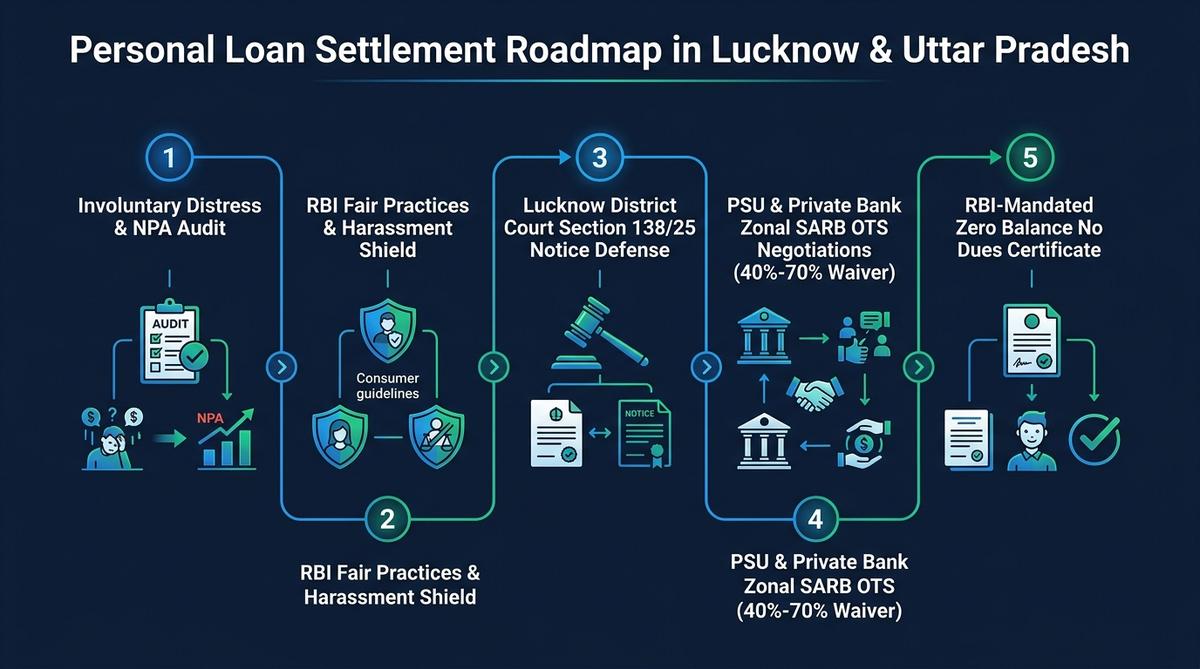
Figure 1.0: End-to-End Lucknow Personal Loan Settlement Framework, Court Notice Defense & Zonal SARB Resolution Protocol.
OTS Haircut Mechanics & The Net Present Value (NPV) Recovery Benchmark
Under the Reserve Bank of India's Master Directions on Resolution of Stressed Assets and board-approved compromise policies, financial institutions assess One-Time Settlement proposals through rigorous financial economics rather than discretionary sympathy. While outsourced recovery agents often claim that banks never reduce outstanding dues, Zonal Settlement Committees located in Hazratganj, Vibhuti Khand, and Kanpur evaluate every non-performing asset against an institutional Net Present Value (NPV) Recovery Valuation Benchmark.
When an unsecured personal loan defaults, the lending bank faces substantial ongoing legal and financial friction. If the bank initiates civil recovery proceedings through an Order 37 summary suit in a Lucknow Civil Court or approaches a Debt Recovery Tribunal (DRT for debts exceeding ₹20 Lakhs), it must remit ad-valorem court fees, retain standing counsel, and navigate 4 to 7 years of court delays. Furthermore, because unsecured loans lack hypothecated collateral, the final probability of cash recovery through asset attachment remains minimal.
Where C_t represents estimated recoveries, r is the discount rate, and deductions account for 3–5 years of court friction and capital locked in NPA provisions.
When a borrower presents an immediate lump-sum or structured compromise proposal through qualified legal advocates, the bank avoids protracted litigation expenses, recovers liquid capital, and immediately writes back 100% of its locked regulatory provisions into its quarterly profit ledger. Due to this financial calculation, bank credit committees routinely sanction compromise settlements offering 40% to 70% principal waivers, alongside a complete 100% write-off of accumulated penal interest, overdue charges, and administrative levies.
Enforcing the RBI Fair Practices Code & Restricting Police Interference in UP
Borrowers facing coercive debt collection in Lucknow and Uttar Pradesh are protected by comprehensive statutory regulations established by the central banking regulator. The Reserve Bank of India Master Directions on Recovery Agents (2022) strictly prescribe recovery conduct and impose substantial penalties on non-compliant institutions.
Under the RBI Fair Practices Code: (1) Recovery agents are strictly barred from contacting borrowers prior to 08:00 AM or after 07:00 PM; (2) Agents cannot use abusive language, intimidation, or harassment; (3) Agents are strictly prohibited from contacting government department heads, HR managers, workplace colleagues, or family relatives; (4) Recovery personnel conducting home visits must carry formal bank authorization letters, display official employee identification, and maintain privacy; (5) Continuous, repetitive calling designed to disturb peace of mind constitutes an actionable regulatory offense.
Furthermore, recovery agents frequently threaten to lodge criminal complaints with local police stations in Hazratganj, Gomti Nagar, or Kanpur. Under Supreme Court rulings in Arnesh Kumar v. State of Bihar and Lalita Kumari v. Government of UP, police officers cannot entertain commercial debt complaints or issue informal police station call letters for civil loan defaults.
When collection agencies breach these mandatory norms, our legal team dispatches formal cease-and-desist notices to the lending institution's Principal Nodal Officer and Board of Directors, while simultaneously filing complaints with the Lucknow Police Commissionerate, the Cyber Crime Cell, and the RBI Integrated Ombudsman Portal (CMS). Faced with regulatory exposure, lenders promptly order collection agencies to cease all direct contact.
5-Step Legal Protocol for Settling Personal Loans with Lucknow Zonal Desks
Achieving a legally binding One-Time Settlement with PSU and private commercial banks in Lucknow requires executing a structured, advocate-led five-stage roadmap that bypasses outsourced tele-callers and negotiates directly with authorized zonal credit desks:
Financial Hardship Dossier Compilation & Liability Audit
Our legal advocates conduct an exhaustive forensic audit of your total loan liability across all lending institutions. We construct an unassailable financial hardship dossier—incorporating corporate termination letters, medical treatment records, bank statements demonstrating cash exhaustion, and GST returns showing business downturns—documenting genuine incapacity to sustain regular EMIs.
Cease-and-Desist Notice & Harassment Shielding
We serve formal legal notices invoking the RBI Master Directions on Recovery Agents to the bank's Principal Nodal Officer and collection departments. This immediately shields your government office or private workplace, family members, and residence from unauthorized visits and intimidatory phone calls.
Statutory Notice Reply in Kaisarbagh & Kanpur Courts
If the lender dispatches Section 25 PSSA or Section 138 NI Act demand notices returnable to Lucknow or Kanpur magistrate courts, our advocates draft and serve comprehensive legal replies within the statutory 15-day window, preventing magistrate escalations and directing the lender toward compromise conciliation.
Direct Negotiations with Hazratganj & Vibhuti Khand Zonal SARB Desks
We bypass third-party collection agencies entirely and submit structured One-Time Settlement proposals directly to the bank's Stressed Assets Recovery Branch (SARB) and Zonal Settlement Committees located in Hazratganj, Ashok Marg, Vibhuti Khand, and Kanpur Mall Road, securing maximum principal waivers (40% to 70%).
Sanction Letter Forensic Audit, Direct Payment & NDC Issuance
We audit the bank's official stamped OTS Sanction Letter to ensure unambiguous debt extinguishment clauses. You remit the agreed settlement amount strictly into your loan account via RTGS/NEFT, followed by our enforcement of the mandatory zero-balance No Dues Certificate under RBI directives.
Sanction Letter Forensics, Mandatory ₹0 NDC & 24-Month CIBIL Repair
A significant danger for distressed borrowers in Uttar Pradesh is paying money based on verbal promises, informal SMS messages, or unauthorized WhatsApp letters shared by recovery agents. Unauthorized collection callers frequently persuade borrowers to deposit partial token amounts, only for those funds to be credited against accrued penal charges while the loan remains active and compounding.
Before any settlement funds are released, our legal advocates verify five essential forensic criteria in the bank's OTS Sanction Letter: (1) It must be printed on official bank letterhead bearing authentic branch seals and officer employee codes; (2) It must clearly state the exact loan account number and compromised settlement amount; (3) It must specify an achievable payment schedule; (4) It must contain an explicit debt extinguishment clause confirming that upon payment, all remaining balance dues stand permanently waived with full withdrawal of legal actions; (5) It must mandate the issuance of a formal zero-balance No Dues Certificate.
Under RBI Circular RBI/2023-24/60, all regulated lenders are legally required to deliver the official No Dues Certificate (NDC) / Loan Closure Certificate and update credit bureau records within 30 calendar days of receiving full settlement payment. If the lender fails to provide the NDC within 30 days due to operational delays, it is statutorily mandated to pay compensation of ₹5,000 for each day of delay directly to the borrower.
Following settlement, the bank reports the account status across all four credit bureaus (CIBIL, Experian, Equifax, CRIF High Mark) as 'Settled' or 'Post-Write-off Settled' with an outstanding balance of ₹0. While this closure permanently terminates active delinquency reporting, it results in a temporary credit score drop and triggers an RBI-mandated 12-month cooling period. Borrowers can systematically rebuild their CIBIL score back to 750+ within 18 to 24 months through disciplined credit rehabilitation, such as utilizing secured fixed-deposit credit cards and maintaining credit utilization below 30%.
Comparing Debt Resolution Pathways for Borrowers in Uttar Pradesh
Evaluating all available legal and financial debt resolution avenues in Uttar Pradesh helps borrowers select the optimal strategy based on debt quantum, financial capacity, and speed of execution:
| Resolution Pathway | Principal Haircut Range | Legal Binding Finality | CIBIL Bureau Status | Resolution Timeline |
|---|---|---|---|---|
| Direct Zonal SARB Settlement (Lucknow) | 40% – 70% Principal Haircut | Complete (Bank NDC Issued) | 'Settled' / ₹0 Dues | 3 to 6 Weeks |
| UP State Lok Adalat (UPSLSA Kaisarbagh) | 45% – 70% Principal Haircut | Absolute (Civil Court Decree) | 'Settled' / ₹0 Dues | Quarterly Lok Adalat Cycles |
| Bank Loan Restructuring | 0% Haircut (Tenure Extension) | Conditional on Monthly EMI | 'Restructured' / Active Debt | 2 to 4 Weeks |
| Civil Court Litigation (Kaisarbagh / HC) | Uncertain (Judicial Discretion) | Subject to Multi-Year Appeal | 'Suit Filed' / Compounding | 4 to 7 Years |
Premier Loan Settlement & Legal Defense Services in Lucknow
Navigating unpayable unsecured debt across Lucknow and Kanpur requires decisive legal representation to stop collection agency harassment, defend statutory notices in Kaisarbagh and Kanpur courts, and negotiate directly with bank Zonal Credit Committees for maximum debt relief. SettleLoans provides end-to-end legal and financial advocacy to help borrowers across Uttar Pradesh reclaim their financial sovereignty.

Settle Loan is India's trusted debt relief and loan settlement platform. We help borrowers overcome financial distress by negotiating with banks and NBFCs to legally settle personal loans and credit card debts. With our transparent, performance-based approach, you can achieve debt freedom and regain your financial peace of mind.
COMPUTER
Frequently Asked Questions on Personal Loan Settlement in Lucknow
Why do salaried and government employees in Lucknow require specialized loan settlement advocates?
Salaried executives, healthcare personnel, and Uttar Pradesh state government employees across Lucknow, Gomti Nagar, and Kanpur face specific vulnerabilities during financial default. Recovery agents often leverage fear of disciplinary inquiries, workplace defamation, and arbitrary salary account freezes. Specialized Lucknow debt settlement advocates invoke central banking guidelines, enforce Code of Civil Procedure salary exemptions, issue formal cease-and-desist notices to bank zonal offices in Hazratganj and Vibhuti Khand, and negotiate structured One-Time Settlements (OTS) with 40% to 70% waivers.
Can a bank freeze my UP Government Treasury salary account under Banker's Lien in Lucknow?
Under Section 171 of the Indian Contract Act, 1872, a bank holds a general lien only over accounts maintained within its own branches. However, lenders cannot attach or debit salary accounts maintained at separate, unlinked banks without an explicit court order. Additionally, under Section 60(1) of the Code of Civil Procedure (CPC), 1908, statutory salary attachment thresholds strictly shield subsistence income. Our legal team assists borrowers in legally rerouting salary credits and revoking NACH mandates to ensure essential living funds remain protected.
Can the Lucknow Police or UP Police arrest me or register an FIR for defaulting on an unsecured personal loan?
No. Unsecured personal loan or credit card default is strictly a civil breach of contract under the Indian Contract Act, 1872. The Uttar Pradesh Police and local police stations across Hazratganj, Gomti Nagar, Aliganj, or Ashiyana have zero statutory authority to summon, detain, or register FIRs against borrowers for financial default. Under Supreme Court precedents in Arnesh Kumar and Lalita Kumari, police officials are prohibited from converting civil commercial recovery matters into criminal proceedings.
How should I respond to a Section 138 NI Act or Section 25 PSSA notice from Lucknow District Court?
Upon receiving a statutory demand notice for a bounced cheque (Section 138 NI Act) or electronic NACH mandate (Section 25 PSSA), you have a critical 15-day statutory window to reply. Empanelled Lucknow advocates draft an assertive legal reply establishing involuntary financial hardship, disputing inflated penal levies, and proposing conciliation. If a complaint is filed at the Kaisarbagh District Court or CJM Court, our advocates enter appearance under Vakalatnama, obtain immediate bail, and refer the matter to the National Lok Adalat for an agreed OTS compromise.
How does the Uttar Pradesh State Legal Services Authority (UPSLSA) Lok Adalat facilitate loan settlement?
The Uttar Pradesh State Legal Services Authority (UPSLSA) conducts National and Special Lok Adalats at the District Court Complex in Kaisarbagh and the Allahabad High Court Lucknow Bench premises. Pre-litigation and pending recovery cases placed before the Lok Adalat bench are settled through mutually agreed compromise. Under Section 21 of the Legal Services Authorities Act, 1987, the Lok Adalat award carries the force of a final Civil Court decree with zero appeal, ensuring 100% refund of court fees and total immunity from future litigation.
Can the entire loan settlement procedure in Lucknow and Kanpur be executed remotely?
Yes. SettleLoans operates a fully digital, legally protected advisory infrastructure. From financial hardship docket preparation, drafting legal replies, coordinating with Zonal Stressed Assets Recovery Branches (SARB) across Ashok Marg, Hazratganj, and Kanpur Mall Road, to auditing official bank sanction letters, every step is conducted securely online. When physical court appearances are required in Kaisarbagh or Kanpur Nagar courts, our empanelled advocates represent you under Vakalatnama.
What percentage of debt waiver is achievable through PSU and Private Bank OTS in Lucknow?
Depending on delinquency aging (90 to 180+ days past due), asset classification (Substandard, Doubtful, or Loss Asset), and documented financial distress (job loss, business contraction, medical emergencies), Lucknow debt settlement advocates routinely secure 40% to 70% waivers on total book outstanding, alongside a complete 100% waiver of accumulated penal interest, compounding levies, and late fees.
How do advocates protect borrowers from aggressive recovery agent visits in Gomti Nagar and Hazratganj?
Advocates issue formal Cease-and-Desist notices citing RBI Master Directions on Recovery Agents and Section 35A of the Banking Regulation Act. The notice bars third-party recovery agencies from visiting government secretariats, corporate IT offices in Vibhuti Khand, or private residences. Any violation triggers immediate statutory complaints to the bank's Principal Nodal Officer, the RBI Banking Ombudsman (CMS Portal), and the Lucknow Police Commissionerate.
What is the mandatory timeline for banks to issue a No Dues Certificate (NDC) after loan settlement?
Under RBI Circular RBI/2023-24/60, all regulated commercial banks and NBFCs must deliver the official No Dues Certificate (NDC) / Loan Closure Certificate and update credit bureau records within 30 calendar days of receiving full settlement payment. Failure to provide closure documents within 30 days makes the lender liable to pay mandatory compensation of ₹5,000 per day of delay directly to the borrower.