- Civil Protection Under Calcutta High Court Jurisprudence: Involuntary personal loan default is strictly a civil dispute governed by the Indian Contract Act, 1872. The Kolkata Police, West Bengal Police, and CID possess zero legal mandate to arrest, summon, or harass defaulting borrowers.
- Bengal Money Lenders Act & Anti-Harassment Safeguards: Aggressive recovery agent visits to tech parks in Sector V Salt Lake, corporate offices in Rajarhat/Park Street, or residences across Ballygunge and Behala are illegal under RBI Master Directions and West Bengal state regulations.
- Bankshall & Alipore Court Notice Defense: Timely advocate-drafted replies to statutory notices under Section 138 of the Negotiable Instruments Act and Section 25 of the Payment and Settlement Systems Act prevent coercive magistrate warrants and steer disputes toward conciliation.
- BBD Bagh & Strand Road Zonal Haircut Benchmarks (40%–70%): Negotiating directly with bank Zonal Stressed Assets Management Branches (SAMB) situated in Dalhousie/BBD Bagh secures 40% to 70% principal waivers and 100% penal interest write-offs based on institutional Net Present Value (NPV) recovery models.
- Binding WBSLSA Lok Adalat Decrees: Compromise settlements recorded before the West Bengal State Legal Services Authority operate as final, unappealable Civil Court decrees, terminating all litigation and mandating ₹0 No Dues Certificates within 30 days under RBI circulars.
The Credit Distress Landscape Across Kolkatas Tech, Corporate
Kolkata occupies a historic and strategic position in Eastern India's financial architecture. The city hosts major public sector banking headquarters and regional zonal offices across BBD Bagh (Dalhousie Square), Strand Road, Park Street, and Camac Street, alongside a rapidly expanding technology and IT-services corridor in Sector V Salt Lake and Rajarhat New Town. Over the past decade, aggressive digital underwriting and unsecured retail credit expansion by major commercial banks (such as State Bank of India, UCO Bank, Punjab National Bank, HDFC Bank, ICICI Bank, Axis Bank, and Bandhan Bank) and non-banking financial companies (NBFCs) flooded salaried tech employees, corporate managers, and MSME entrepreneurs with instant personal loans and high-limit credit cards.
However, macroeconomic headwinds—including tech industry downsizing, sudden variable compensation cuts, post-pandemic business disruptions in wholesale trade hubs like Burrabazar and Posta, catastrophic medical emergencies, and rising cost-of-living pressures—have severely impacted the debt-servicing capacity of thousands of borrowers across the Kolkata Metropolitan Area. When unexpected financial distress strikes, borrowers find themselves struggling with compounding Equated Monthly Installments (EMIs) across multiple credit lines simultaneously.
Instead of offering compassionate restructuring under RBI frameworks, financial institutions frequently assign delinquent portfolios to aggressive third-party collection agencies operating out of Kolkata, Howrah, and North 24 Parganas. These collection agents deploy unlawful intimidation tactics: unceasing telephone harassment from unlisted numbers, unauthorized visits to IT campuses in Sector V and New Town, threats directed at family members in residential neighborhoods (such as Salt Lake, Ballygunge, Behala, Jadavpur, and Dum Dum), and false threats of immediate arrest. Borrowers in West Bengal must realize that these coercive collection practices violate statutory laws, and structured legal remedies exist to achieve complete debt freedom.
NPA Delinquency Architecture & Calcutta High Court Civil Protections
Achieving a favorable personal loan settlement in Kolkata requires a precise understanding of the Reserve Bank of India's Prudential Norms on Income Recognition, Asset Classification and Provisioning (IRACP). Commercial banks and NBFCs do not entertain substantial debt waivers during early delinquency; compromise settlements become commercially attractive to institutions only as a delinquent debt progresses through regulatory delinquency stages.
During the initial 90 days of non-payment, an overdue loan account is classified as a Special Mention Account (SMA-0 for 1–30 days overdue, SMA-1 for 31–60 days overdue, and SMA-2 for 61–90 days overdue). Once the account crosses 90 consecutive days of non-payment, it is mandatorily classified as a Non-Performing Asset (NPA). Upon NPA classification, the lending institution is legally required to set aside mandatory capital provisions from its operational profits (15% to 25% for Substandard assets, 40% to 100% for Doubtful assets, and 100% for Loss assets).
| Delinquency Category | Aging Timeline | Bank Provisioning Burden | Recovery Strategy & Haircut Viability |
|---|---|---|---|
| SMA-0 & SMA-1 | 1 – 60 Days Overdue | Standard Capital Provision | Automated SMS reminders, outbound tele-calling, NACH bounce charges. Haircut negotiations unavailable. |
| SMA-2 | 61 – 90 Days Overdue | Watchlist Capital Allocation | Pre-NPA demand notices issued, recovery agency allocation. Tenure restructuring or moratorium possible. |
| Substandard NPA | 91 – 365 Days Overdue | 15% – 25% Regulatory Provision | File transferred to Zonal Stressed Asset Branches at BBD Bagh / Strand Road. 35%–50% principal haircuts become viable. |
| Doubtful (D1 / D2) | 1 – 3 Years Overdue | 40% – 100% Capital Provision | Banks prioritize cash realization over prolonged civil litigation. 50%–65% principal haircuts achievable. |
| Loss Asset | 3+ Years Overdue | 100% Written-off Balance | Fully written off on bank balance sheet. Deep One-Time Settlements (up to 70% haircut) or Lok Adalat compromise awards. |
The Hon'ble Calcutta High Court has consistently affirmed across multiple landmark judgments that financial institutions cannot deploy coercive, extra-legal, or muscular methods to recover personal loan dues. The court has maintained that financial institutions are fully accountable for the civil and criminal wrongs committed by their outsourced recovery agents and that bank claims must strictly respect statutory due process.
Check Your Loan Settlement Options
Answer 2 quick questions to evaluate your settlement eligibility.
1. What type of loan do you want to settle?
Defending Legal Notices in Bankshall, Sealdah, and Alipore Magistrate Courts
When electronic National Automated Clearing House (NACH) mandates or physical post-dated security cheques bounce due to insufficient funds, banks and NBFCs issue formal statutory demand notices. These notices are issued under Section 25 of the Payment and Settlement Systems Act, 2007 (PSSA) or Section 138 of the Negotiable Instruments Act, 1881 (NI Act), threatening criminal complaints across Kolkata's key judicial complexes: the City Civil & Sessions Court (Bankshall Court), Alipore District & Sessions Court, Sealdah Metropolitan Magistrate Court, and Howrah District Court.
Receiving a statutory legal notice demands swift, professional legal action rather than panic. Under the law, the borrower has a mandatory 15-day statutory window from the date of receipt to respond. Ignoring a statutory notice allows the bank's empanelled advocates to file a private criminal complaint (C.C.), leading to court summons and potential bailable warrants if unattended.
An experienced Kolkata debt defense advocate drafts an exhaustive legal reply within the 15-day window. The reply formally establishes: (a) The genuine absence of fraudulent intent or mens rea; (b) Documentary evidence of involuntary economic distress (such as termination slips, medical reports, or audited business losses); (c) Substantive legal disputes regarding inflated compounding interest, unnotified late fees, and unlawful penal levies; (d) A bona fide proposal for compromise resolution under RBI guidelines.
Placing this formal legal response on record fundamentally shifts the institutional dynamic. Because prosecuting a complaint through Kolkata's overcrowded magistrate courts requires years of continuous advocate appearances, court fees, and witness cross-examinations, bank legal officers routinely prefer redirecting accounts with active legal replies to the Zonal Stressed Asset Resolution Branch or the National Lok Adalat for an expedited One-Time Settlement.
Banker's Right of General Lien (Section 171) & Ring-Fencing Subsistence Accounts
A critical legal risk that distressed borrowers in Kolkata must proactively manage is the Banker's Right of General Lien and Set-Off under Section 171 of the Indian Contract Act, 1872. This statutory doctrine grants a lending bank the legal right to unilaterally appropriate funds, freeze balances, or set off monies from any savings account, current account, fixed deposit, or salary account maintained within that exact same banking institution under the same Customer Information File (CIF) or PAN.
For instance, if a borrower defaults on an unsecured personal loan with State Bank of India (SBI Samriddhi Bhavan), UCO Bank, Punjab National Bank, HDFC Bank, or ICICI Bank while maintaining their active corporate salary account or business operating account in the same institution, the automated core banking system will sweep incoming salary credits or freeze account access the moment an EMI bounces. This sudden loss of liquidity can leave a family completely unable to meet essential living costs, rent, or medical expenses.
However, this right of set-off has clear statutory limitations: a lending bank cannot attach, freeze, or debit funds held in independent third-party banking institutions without obtaining a specific decree or interim attachment warrant from a competent Civil Court. Therefore, borrowers facing imminent default must immediately ring-fence their subsistence by redirecting their salary credits and operational liquidity to an independent bank where they have no outstanding debt obligations.
Personal Loan Settlement Roadmap in Kolkata & West Bengal
The visual roadmap below details the complete stage-by-stage debt resolution lifecycle in Kolkata—from initial delinquency and court defense in Bankshall/Alipore to RBI anti-harassment protections, BBD Bagh SAMB negotiations, and final ₹0 No Dues Certificate delivery.
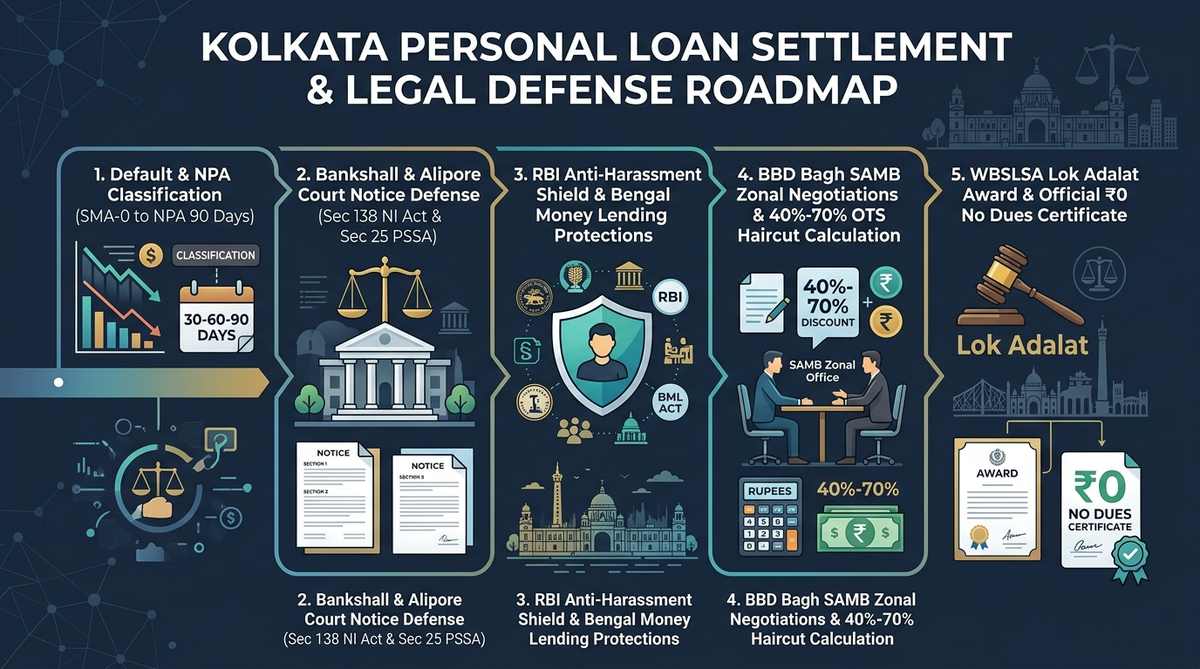
Figure 1.0: End-to-End Kolkata Personal Loan Settlement Framework, Court Notice Defense & BBD Bagh SAMB Resolution Roadmap.
OTS Haircut Mechanics & The Net Present Value (NPV) Recovery Benchmark
Under the Reserve Bank of India's Master Directions on Resolution of Stressed Assets and board-approved compromise settlement policies, banks evaluate One-Time Settlement proposals through structured financial economics rather than emotional appeals. While outsourced collection tele-callers assert that banks never offer discounts, Zonal Credit Committees along BBD Bagh and Strand Road evaluate every defaulted account against an institutional Net Present Value (NPV) Recovery Valuation Benchmark.
When an unsecured personal loan defaults, the lending institution faces significant financial friction. If the bank initiates civil recovery proceedings through an Order 37 summary suit in a Kolkata Civil Court or approaches a Debt Recovery Tribunal (DRT for debts exceeding ₹20 Lakhs), it must pay substantial ad-valorem court fees, retain senior legal counsel, and endure 4 to 7 years of court delays. Furthermore, because unsecured loans lack hypothecated collateral, the final probability of cash recovery through asset attachment remains minimal.
Where C_t represents estimated recoveries, r is the discount rate, and deductions account for 3–5 years of court friction and capital locked in NPA provisions.
When a borrower presents an immediate lump-sum or structured OTS payment through qualified legal advocates, the bank eliminates protracted litigation expenses, recovers liquid capital, and immediately writes back 100% of its locked regulatory provisions into its quarterly profit ledger. As a result of this commercial calculation, bank credit committees routinely approve compromise settlements granting 40% to 70% principal haircuts, along with complete 100% waivers of all accumulated penal interest, late fees, and bounce charges.
Anti-Harassment Protections Under RBI Rules & Bengal Money Lenders Act
Borrowers facing coercive debt collection in Kolkata and West Bengal are protected by a robust framework of statutory and regulatory safeguards. The RBI Master Circular on Recovery Agents and Conduct (2022) strictly prohibits lenders and their third-party agents from engaging in intimidating behavior. Collection agents are barred from calling borrowers before 8:00 AM or after 7:00 PM, calling continuously throughout the day, using abusive language, threatening physical violence, or contacting relatives, friends, or employers.
Furthermore, under West Bengal state jurisprudence and the principles underpinning the Bengal Money Lenders Act, 1940, any recovery agency operating without statutory accreditation or engaging in extortionate, usurious, or coercive recovery practices faces strict civil and criminal liability. Recovery visits to corporate workplaces (such as Sector V IT parks, Candor TechSpace, or Dalhousie corporate offices) constitute an unlawful invasion of privacy and workplace defamation.
When collection agents breach these mandates, SettleLoans advocates issue immediate Cease-and-Desist notices. Continued violations are escalated to the Kolkata Police Commissionerate (Lalbazar), the Cyber Crime Division, the bank's Principal Nodal Officer (PNO), and the RBI Integrated Ombudsman via the Complaint Management System (CMS), enforcing immediate cessation of all direct agent contact.
The 5-Stage Advocate Settlement Protocol at BBD Bagh / Strand Road Zonal Desks
Navigating institutional settlement requires bypassing third-party collection callers who lack credit write-off authority, and engaging directly with the bank's authorized decision-makers at Stressed Assets Management Branches (SAMB) located along BBD Bagh and Strand Road. SettleLoans executes an advocate-led, 5-stage settlement protocol:
1Forensic Debt Audit & Legal Scrutiny
Our legal team analyzes loan agreements, statements of accounts, and penalty ledgers, stripping away unlawful compounding charges, insurance mis-selling add-ons, and unjustified penal levies to establish true principal liability.
2Hardship Dossier & Cease-and-Desist Representation
We compile certified documentary proof of genuine insolvency (medical certificates, salary reduction records, termination notices) and issue statutory notices under RBI Master Directions to halt all recovery agent harassment.
3Court Representation & Section 138/25 Defense
Empanelled Kolkata advocates enter appearances under Vakalatnama in Bankshall, Alipore, or Sealdah courts, secure bail without custodial risk, and move applications under Section 147 NI Act to refer the matter to Lok Adalat.
4SAMB Zonal Negotiations & 40%–70% OTS Structuring
Our advocates negotiate directly with Zonal Stressed Assets Resolution Committees along BBD Bagh, structuring customized one-time lump-sum or structured installment settlements with maximum principal write-offs.
5Sanction Letter Audit, Direct Payment & ₹0 NDC Delivery
Every sanction letter is forensically audited to ensure full debt extinguishment before direct payment into the loan account, followed by mandatory ₹0 No Dues Certificate issuance within 30 days under RBI Circular RBI/2023-24/60.
Sanction Letter Forensics, Mandatory ₹0 NDC & Credit Score Rehabilitation
A common pitfall for borrowers in Kolkata is falling victim to recovery agent fraud—remitting partial funds based on verbal promises or informal WhatsApp messages, only to discover that the bank credited the amount toward penal interest while keeping the full loan active. A legally binding compromise settlement requires an official, verifiable Settlement Sanction Letter issued on the bank's corporate letterhead, digitally signed by an authorized Zonal Credit Manager from the bank's Kolkata SAMB office.
Before remitting a single rupee, our legal team audits the sanction letter to ensure: (a) Explicit mention of the agreed settlement amount and full waiver of remaining balances; (b) Clear payment schedule with direct loan account deposit instructions; (c) Unconditional commitment to withdraw pending Section 138/25 court cases; (d) Definitive undertaking to release the ₹0 No Dues Certificate (NDC) and update credit bureaus within 30 days.
Under RBI Circular RBI/2023-24/60, banks that fail to issue the NDC within 30 calendar days of settlement remittance must pay mandatory statutory compensation of ₹5,000 per day of delay directly to the borrower. Following settlement, the account status is updated to 'Settled' with a zero balance across CIBIL, Experian, Equifax, and CRIF High Mark. While this temporarily impacts credit scores, having an extinguished debt with zero overdue balances allows borrowers to rebuild their CIBIL score back to 750+ within 18 to 24 months using secured credit cards and disciplined payments.
Comparing Debt Resolution Pathways in Kolkata
Borrowers facing personal loan defaults in Kolkata must weigh their options carefully. The table below illustrates the stark contrast between professional advocate representation, unguided individual attempts, and unregulated collection agency interactions:
| Resolution Parameter | SettleLoans Legal Representation | Direct Borrower Negotiation | Unregulated Debt Agencies |
|---|---|---|---|
| Anti-Harassment Protection | Immediate Cease-and-Desist legal notices halting all home and office harassment. | Frequent verbal abuse, workplace visits, and persistent phone calls. | No legal standing; cannot stop recovery harassment. |
| Court & Summons Defense | Full Vakalatnama appearance, bail management, and Section 147 compounding in Bankshall/Alipore. | High risk of non-bailable warrants due to procedural errors or missed hearings. | Zero legal representation; non-advocates barred from court appearances. |
| Average Haircut Achieved | 40% to 70% principal waiver + 100% penal interest write-off via SAMB desks. | Limited to 10%–20% waiver; banks insist on full principal recovery. | False promises of 80%+ waivers leading to unverified partial payments. |
| Legal Finality & ₹0 NDC | Binding Lok Adalat decree + audited bank letterhead sanction + ₹0 NDC within 30 days. | Risk of unresolved balance dues and continued interest compounding. | Frequent fraud involving forged sanction letters or diverted funds. |

Settle Loan is India's trusted debt relief and loan settlement platform. We help borrowers overcome financial distress by negotiating with banks and NBFCs to legally settle personal loans and credit card debts. With our transparent, performance-based approach, you can achieve debt freedom and regain your financial peace of mind.
COMPUTER
Frequently Asked Questions on Personal Loan Settlement in Kolkata
Why do borrowers in Kolkata need specialized loan settlement advocates?
Kolkata represents a unique credit environment characterized by heavy PSU bank concentrations (like SBI Samriddhi Bhavan, UCO Bank, and PNB) alongside private lenders and aggressive fintech NBFCs. When tech professionals in Sector V Salt Lake or business owners in Burrabazar face financial distress, recovery agencies often exploit procedural unfamiliarity. Specialized Kolkata debt settlement advocates understand the distinct balance-sheet write-off guidelines of public and private sector banks, invoke Calcutta High Court protections against coercive collection, represent clients in Bankshall and Alipore courts, and negotiate structured 40% to 70% One-Time Settlements (OTS).
Can Kolkata Police or CID arrest me for defaulting on an unsecured personal loan?
No. Under Indian jurisprudence and established Calcutta High Court precedents, defaulting on an unsecured personal loan or credit card is strictly a civil breach of contract governed by the Indian Contract Act, 1872. The Kolkata Police, West Bengal Police, and CID have zero statutory jurisdiction to register criminal FIRs, issue summons, or detain borrowers for involuntary commercial debt defaults. In Arnesh Kumar v. State of Bihar, the Supreme Court strictly restricted arbitrary criminal conversions of commercial disputes.
What should I do if I receive a Section 138 or Section 25 notice from Bankshall or Alipore Court?
Never ignore a judicial notice or court summons. If NACH electronic debits or repayment cheques bounce, banks issue 15-day statutory notices under Section 25 PSSA or Section 138 NI Act. An empanelled Kolkata advocate enters appearance under a formal Vakalatnama, secures immediate bail without custodial risk, disputes inflated compounding interest, and files applications under Section 147 NI Act to refer the dispute to the West Bengal State Legal Services Authority (WBSLSA) Lok Adalat for an agreed OTS compromise.
How does Lok Adalat settlement work under the West Bengal State Legal Services Authority (WBSLSA)?
The West Bengal State Legal Services Authority (WBSLSA), seated near the Calcutta High Court, conducts National Lok Adalats quarterly across the City Civil Court (Bankshall Court), Alipore District Court, Sealdah Court, and Howrah Court. When your advocate places your debt dispute before the Lok Adalat bench, both parties negotiate a discounted lump-sum settlement. An award passed under Section 21 of the Legal Services Authorities Act, 1987, operates as a final, unappealable Civil Court decree, guaranteeing a 100% refund of court fees and terminating all recovery litigation.
Can a bank freeze or debit my salary account in Kolkata under Section 171 Banker Lien?
Under Section 171 of the Indian Contract Act, 1872, banks possess a general Banker's Right of Lien, enabling them to set off funds from savings or salary accounts maintained within the exact same banking entity. However, lenders cannot touch salary accounts maintained at independent third-party banks without an explicit attachment order from a competent Civil Court. Our legal team assists borrowers in legally segregating salary disbursements into unlinked accounts and revoking standing NACH mandates to safeguard monthly livelihood expenses.
What percentage of debt waiver can advocates in Kolkata achieve on personal loans?
Depending on delinquency aging (90 to 180+ days past due), verified financial hardship (job loss, medical crisis, business closure), and bank NPA provisioning categories (Substandard, Doubtful, or Loss assets), experienced Kolkata debt settlement advocates typically secure 40% to 70% waivers on total outstanding book debt, along with a 100% full waiver of accumulated penal interest, late fees, and compounding charges.
How do legal advocates protect IT professionals in Sector V Salt Lake and Rajarhat from recovery harassment?
Advocates issue formal Cease-and-Desist legal notices citing RBI Master Directions on Recovery Agents, Section 35A of the Banking Regulation Act, and Calcutta High Court rulings. The notice explicitly puts the lender on notice against dispatching third-party recovery agents to corporate campuses (such as Sector V IT parks, DLF IT Park, Candor TechSpace Rajarhat) or residential gated communities. Any unauthorized trespass or harassment triggers immediate complaints to the bank's Principal Nodal Officer, RBI Banking Ombudsman, and the jurisdictional Police Commissionerate.
How do banks calculate One-Time Settlement (OTS) haircuts using Net Present Value (NPV)?
Banks evaluate OTS offers by comparing immediate cash recovery against the Net Present Value of prolonged litigation in Kolkata courts. Because summary civil suits and execution proceedings in Bankshall or Alipore courts can take 4 to 7 years, incurring substantial counsel fees and court costs, an immediate lump-sum settlement of 30% to 50% of the book debt often yields a higher Net Present Value for the lender than uncertain future recovery.
How do I ensure a loan settlement in Kolkata is authentic and legally binding?
Never hand over cash to collection agents or transfer money into third-party settlement accounts. A legitimate settlement requires an official Settlement Sanction Letter issued on the bank's corporate letterhead, digitally signed by an authorized Zonal Credit Manager from the bank's Kolkata Stressed Assets Management Branch (SAMB) at BBD Bagh or Strand Road. Settlement payments must be deposited directly into your designated loan account via NEFT/RTGS, followed by an official ₹0 No Dues Certificate (NDC).
What is the mandatory timeline for banks to issue a No Dues Certificate (NDC) under RBI rules?
Under RBI Circular RBI/2023-24/60, all regulated commercial banks and NBFCs are legally mandated to release the official No Dues Certificate (NDC) and update credit bureau records within 30 calendar days of receiving full settlement remittance. If a bank fails to deliver the closure document within 30 days without valid justification, it must pay mandatory statutory compensation of ₹5,000 per day of delay directly to the borrower.