- Bypass Call Centre Agents: Third-party collection agencies have zero waiver authority; direct negotiations must be conducted with the Bank Stressed Assets Management Vertical (SAMV).
- Statutory RBI Compromise Protection: The Reserve Bank of India Framework for Compromise Settlements obligates commercial banks to maintain transparent, board-approved OTS policies.
- Leverage NPV Accounting Strain: High capital provisioning requirements under IRAC norms incentivize banks to accept discounted upfront lump-sums over protracted litigation.
- Forensic Sanction Letter Audit: Never pay settlement dues without an official, stamped OTS Sanction Letter confirming exact principal write-offs and a guaranteed ₹0 No Dues Certificate.
1. NPA Classification Stressed Asset Dynamics: When Does a
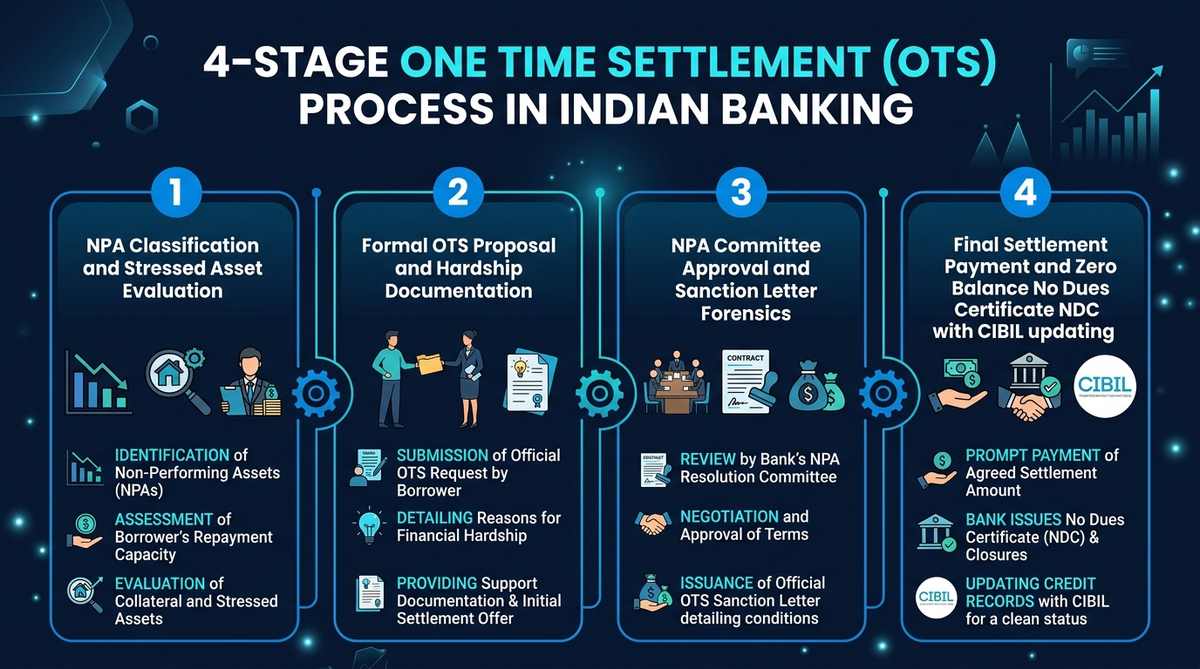
Jab koi udhardata (borrower) kisi vyaktigat loan (personal loan), credit card, auto loan ya unsecured business loan ki masik EMI lagatar teen mahine ya 90 dinon tak jamane mein asafal rehta hai, toh Reserve Bank of India ke prudential accounting norms ke tehat us loan account ko Special Mention Account-2 (SMA-2) se transition karke Non-Performing Asset (NPA) ghoshit kar diya jata hai. Banking jurisprudence mein NPA ka darja milte hi bank ki balance sheet mein us account se aane wala interest income recognize hona band ho jata hai, aur bank par statutory provisioning ka bhari bojh padna shuru ho jata hai.
Yeh point samajhna behad mahatvapurna hai ki jab tak aapka loan standard performing category (1 se 89 din ke default) mein rehta hai, bank ka internal retail collections wing aapko kisi bhi prakar ka principal discount offer karne ke liye authorized nahi hota. Is charan par bank sirf penal charges ya late fees mein mamuli concession dekar restructuring ka prastav de sakta hai. Lekin jaise hi account 90 din ki boundary cross karke Sub-Standard Asset (NPA) banta hai, loan file standard branch banking se transfer hokar bank ke Stressed Asset Management Vertical (SAMV) ya Stressed Assets Resolution Branch (SARB) ke nirdeshon mein aa jati hai.
Yahin se One-Time Settlement (OTS) ka kanooni aur practical dwar khulta hai. Bank ke stressed asset officers yeh bhabhi roop se jante hain ki unsecured personal loans aur credit card portfolios mein physical collateral ya mortgaged property na hone ke kaaran lambi civil litigation (Civil Suits, Summary Suits under Order 37 CPC ya Section 138 NI Act) mein shamil hona bank ke liye financial aur administrative roop se behad nuksaandeh hota hai. Isiliye, jab borrower bona fide financial crisis prove karta hai, toh bank unrecoverable NPA ko write-off book karke compromise settlement finalize karne ke liye teji se taiyar hota hai.
2. Approaching the Bank's Stressed Asset Department: Bypassing Third-Party Recovery Chaos
Adhikansh borrowers jo loan default mein aate hain, unka sabse pehla aur durbhagyavash sabse galat samna third-party collection agencies aur outsourced telecallers se hota hai. Yeh recovery agents pure commission model par kaam karte hain aur unke paas kisi bhi prakar ke financial discount ya loan write-off ko approve karne ki koi kanooni shakti nahi hoti. Unka ekmatra uddeshya borrower par psychological pressure create karke minimum overdue amount jama karwana hota hai, jisse unka monthly target pura ho sake.
Yadi aap One-Time Settlement (OTS) lena chahte hain, toh aapko in third-party recovery agents ke sath behas karke samay vyarth karne ke bajaye bank ke authentic administrative hierarchy ko formal tarike se approach karna hoga. Har commercial bank (jaise SBI, HDFC Bank, ICICI Bank, Axis Bank, Bank of Baroda) aur licensed NBFC (jaise Bajaj Finance, Tata Capital) mein ek dedicated Stressed Assets Resolution Branch (SARB), Special Stressed Asset Vertical (SSAV) ya Zonal Asset Recovery Operations Desk hota hai.
Stressed Asset Department ko approach karne ke teen vyavasthit tareeqe hote hain:
1. Identifying the Regional Asset Recovery Head: Apne district ya city ke Zonal Office mein jakar Chief Manager (Asset Recovery) ya Stressed Assets Vertical Lead ka contact address prapt karein. Regular branch managers aksar files ko delay karte hain kyunki unki appraisal performance NPA numbers par nirbhar karti hai, jabki recovery vertical ka mandate hi bad loans ko recover karke close karna hota hai.
2. Submitting Through Authorised Registered Post: Bank ke Stressed Asset Vertical ko formal representations hamesha Registered Post with A.D. ya official registered email IDs par dispatch karein, jisse communication ka ek unbreakable audit trail maintain rahe.
3. Legal Representation through Banking Counsel: Jab aap kisi seasoned debt settlement advocate ke madhyam se representation bhejte hain, toh bank legal desk ko yeh pata chal jata hai ki borrower apne rights aur consumer protections se poori tarah avgat hai, jisse arbitrary harassment turant ruk jati hai aur formal settlement talks shuru hoti hain.
Check Your Loan Settlement Options
Answer 2 quick questions to evaluate your settlement eligibility.
1. What type of loan do you want to settle?
3. RBI Statutory Framework & Compromise Settlement Directives: Borrower Rights & Protections
One-Time Settlement koi bank ki kripa ya daya par aadharit anurodh nahi hai, balki Reserve Bank of India dwara nirdharit Prudential Framework for Resolution of Stressed Assets aur Master Directions on Compromise Settlements and Technical Write-offs (2023–2024 Guidelines) ke tehat ek legitimate kanooni upchar hai. RBI ne sabhi commercial scheduled banks, regional rural banks, aur NBFCs ko spashtha aadesh diya hai ki unke board of directors dwara approved ek transparent settlement policy honi chahiye.
In statutory guidelines ke tehat borrower ko nimnlikhit shaktishali kanooni surakshaen prapt hain:
Right to Fair Treatment & Penal Charge Elimination: RBI ke Fair Lending Practice circulars ke mutabiq, banks kisi bhi overdue amount par compound penal interest ya hidden administrative charges nahi laga sakte. Settlement calculations ke dauran borrower bank se sabhi penal surcharges aur capitalised charges ko 100% reverse karne ki maang kar sakta hai.
Mandatory Written Board Policy Adherence: Bank arbitrary tareeqe se kisi ek borrower ko discount dekar doosre ko deny nahi kar sakta. Har sanction decision bank ke delegation of financial powers matrix (Scale IV Chief Managers se lekar Executive Committee of the Board tak) ke transparent norms par aadharit hona anivarya hai.
Protection Against Coercive Debt Collection: Banking Regulation Act, 1949 aur RBI Master Directions on Recovery Agents ke anusaar, jab formal settlement talks chal rahi hon ya legal notice ka dispute live ho, bank kisi bhi prakar ki physical intimidation, odd-hours calling (subah 8 baje se pehle ya sham 7 baje ke baad), ya workplace humiliation nahi kar sakta. Aisa hone par Banking Ombudsman aur Indian Penal Code ke Section 503/506 ke tehat bank par kadi kanooni karwayi ki ja sakti hai.
4. Bank Accounting Mechanics: How Stressed Asset Committees Calculate NPV & Haircuts
Jab aap bank ko OTS proposal bhejte hain, toh bank ka Stressed Assets Committee yeh faisla kaise leta hai ki aapko 40%, 50% ya 65% ka discount diya jaye? Iske peeche banking finance ka ek scientific mathematical evaluation hota hai jise Net Present Value (NPV) of Recovery kaha jata hai.
Jab koi loan NPA ban jata hai, toh bank ko RBI ke Income Recognition and Asset Classification (IRAC) norms ke mutabiq apni balance sheet ke profit mein se substantial provisioning reserve create karna padta hai: Sub-Standard Asset par 15% to 25%, Doubtful Asset-1 (1 saal tak NPA) par 25% to 40%, Doubtful Asset-2 (1 se 3 saal) par 40% to 100%, aur Loss Asset par 100% provisioning. Yeh provisioning bank ke capital adequacy ratio (CAR) par bhari dabav banati hai.
Yadi bank borrower ke khilaf Civil Court, Debt Recovery Tribunal (DRT), ya Section 138 NI Act ke tehat litigation karta hai, toh Indian judicial ecosystem mein case chalne mein kam se kam 3 se 6 saal ka samay lagta hai. Is dauran bank ko heavy advocate fees, execution court expenses, aur administrative cost uthani padti hai. Isiliye bank ki credit risk evaluation team nimnlikhit formula par recovery compare karti hai:
Where C_t represents estimated recoveries, r is the discount rate, and deductions account for 3–5 years of court friction and capital locked in NPA provisions.
Is calculation ke tahat, yadi bank ko 5 saal baad court se litigation ke kharche kaatkar 70% milne ki sambhavna hai, toh aaj ke din bina kisi court friction aur litigation cost ke 40% se 50% cash recovery lena bank ke financial health ke liye zyada profitable hota hai. Jab aapka advocate bank ke saamne is NPV balance sheet reality ko present karta hai, toh bank settlement approval ko green signal deta hai.
One Time Settlement (OTS) Process in Indian Banking: 4-Stage Resolution Blueprint
6. Drafting a Shaktishali OTS Proposal: Hardship Documentation & Forensic Substantiation
Ek shaktishali One-Time Settlement (OTS) proposal letter koi sadharan maafi-nama ya emotional application nahi hota, balki ek highly structured legal and financial dossier hota hai. Bank ke Stressed Asset Committee ke samne har roz saikdon settlement requests aati hain. Aapka proposal tabhi approve hota hai jab woh bank ke internal audit standards aur RBI prudential requirements par 100% khara utarta hai.
Ek professional OTS representation dossier mein nimnlikhit pancho mukhya forensic pillars shamil hone chahiye:
Pillar 1: Complete Identification & Loan Ledger Audit. Proposal mein borrower ka naam, pan card number, loan account number, sanction date, original sanctioned amount, aur total repaid EMIs ka exact breakdown hona chahiye. Iske sath bank ke ledger par lagaye gaye illegal compound interest, bouncing charges, aur penal surcharges ko itemized karke unhe waive karne ka formal claim hona chahiye.
Pillar 2: Substantiating Bona Fide Economic Hardship. Bank ko yeh thos praman dena hoga ki default jaanbujhkar nahi balki unki niyantran se bahar ke paristhitiyon ke kaaran hua. Yadi default job termination ya salary cut ke kaaran hua hai, toh resignation/termination letters aur bank statements lagaye jayein. Yadi business downturn hua hai, toh audited balance sheets, GST filing drops, ya client cancellation notices shamil karein. Medical calamity ke mamle mein hospital discharge summaries aur pharmacy expenditure bills attach karein.
Pillar 3: Statement of Inability to Service Future EMIs. Spasht roop se establish karein ki current cash flow regular EMIs ko sustain karne mein asafal hai aur aane wale samay mein financial recovery asambhav hai.
Pillar 4: Source of Compromise Settlement Funds. Bank hamesha yeh janna chahta hai ki yadi aapke paas paise nahi hain, toh settlement amount kahan se aayega. Proposal mein mention karein ki compromise amount parivar ke sadasyon, doston se udhar lekar, ya kisi gold asset ko liquidate karke arrange kiya ja raha hai, jo sirf one-time compromise closure ke liye hi uplabdh hai.
Pillar 5: Firm, Time-Bound Payment Commitment. Bank ko ek clear proposal dein (jaise: "Upon receipt of official sanction, ₹X will be deposited within 15 to 30 days via direct RTGS/NEFT against ₹0 No Dues Certificate").
7. Multi-Tier Negotiation Tactics: Countering Initial Rejections & Securing Maximum Haircuts
Banking negotiations mein pehla proposal aamtaur par bank dwara reject kar diya jata hai ya bank behad unchi counter-offer (jaise 85% se 90% of total dues) pesh karta hai. Yeh bank ki ek standard tactical move hoti hai jisse woh borrower ki financial capacity ko test karte hain. Yahan par borrower ko ghabra kar surrender nahi karna chahiye, balki structured multi-tier escalation tactics ka upyog karna chahiye:
Tactic 1: Anchoring on Net Principal Outstanding. Bank ke total inflated claim (jismein penal interest aur legal costs shamil hain) par negotiation karne ke bajaye hamesha Net Principal Outstanding par discussion ko anchor karein. Unsecured personal loans aur credit cards mein target hamesha net principal ka 35% se 50% hona chahiye.
Tactic 2: Leveraging Fiscal Year-End & Quarter-End Pressures. Commercial banks par har quarter (visheshkar March, September aur December quarter-ends) mein apne gross NPA aur net NPA numbers ko kam karne ka bhari managerial pressure hota hai. In mahino ke aakhiri 20 dinon mein Stressed Asset Committees maximum discount (50% se 70% haircut) approve karne ke liye adhik lachili (flexible) hoti hain.
Tactic 3: Single Tranche vs. Multi-Tranche Structuring. Bank hamesha single lump-sum payment ko preference dete hain aur uspe maximum discount dete hain. Lekin yadi aapke paas lump sum nahi hai, toh aap settlement ko 2 se 3 structured monthly tranches mein split karne ke liye negotiate kar sakte hain, bas shart yeh hai ki sanction letter mein clear installment dates mentioned hon.
Tactic 4: Escalation to Alternate Dispute Forums (Lok Adalat). Yadi bank branch arbitrary roop se negotiations ko stall karti hai, toh matter ko National Lok Adalat mein pre-litigation settlement ke liye reference appeal file karke judicial bench ke samne transfer karein. Lok Adalat bench unfair penalties ko cancel karwake ek dignified settlement execute karwati hai.
8. Sanction Letter Forensics & Securing ₹0 No Dues Certificate: Preventing Future Legal Traps
One-Time Settlement ka sabse nazuk aur kanooni roop se sensitive charan hota hai OTS Sanction Letter ki forensic auditing. Bharat mein hajaron borrowers fraud ka shikar bante hain jab woh recovery agent ke bheje gaye WhatsApp PDF ya plain email par bharosa karke paise transfer kar dete hain. Kuch mahino baad unhe pata chalta hai ki unke paise regular EMI account mein deduct ho gaye aur baki lakho rupaye ka loan abhi bhi unke naam par chal raha hai.
Kisi bhi settlement amount ko pay karne se pehle official Sanction Letter mein nimnlikhit chaar anivarya elements ki forensic janch karein:
1. Authentic Bank Letterhead & Stamped Authority: Sanction letter bank ke official corporate letterhead par hona chahiye, jismein Competent Authority (Scale-IV Chief Manager ya AGM) ke official rubber stamp aur physical/digital signature hone anivarya hain.
2. Unambiguous Account Details & Settlement Amount: Letter mein aapka 16-digit loan account number, original outstanding claim, sanctioned settlement amount, aur waiver amount spashth roop se alag-alag likha hona chahiye.
3. Full & Final Satisfaction Clause: Letter mein explicitly likha hona chahiye: "Upon payment of the agreed settlement amount of ₹X on or before [Date], the bank shall have no further claims whatsoever against the borrower, and the loan account shall stand fully and finally closed."
4. Mandatory Commitment to Issue ₹0 NDC within 30 Days: Letter mein yeh undertaking honi chahiye ki payment credit hone ke 21 se 30 dinon ke bheetar bank stamped No Dues Certificate (NDC) / No Objection Certificate (NOC) dispatch karega aur court litigation (yadi koi ho) ko withdraw karega.
9. CIBIL Rectification & Comparative Settlement Matrix: Post-OTS Financial Rehabilitation
One-Time Settlement finalize hone ke baad credit reporting ek crucial reality hoti hai. Jab aap loan compromise settle karte hain, toh RBI Credit Information Companies (Regulation) Act ke mutabiq bank TransUnion CIBIL, Experian, Equifax, aur CRIF High Mark ko account status 'Settled' ya 'Post-Write-Off Settled' ke roop mein report karta hai, jabki balance ₹0 darshaya jata hai.
Halanki 'Settled' status se credit score temporary roop se prabhavit hota hai, lekin yeh continuous default ya legal suit filed status se hazar guna behtar hota hai kyunki legal liability hamesha ke liye samapt ho jati hai. 12 se 24 mahino ke bheetar aap ek secured fixed deposit credit card banwakar, timely utility bill payments karke aur disciplined financial management ke zariye apne credit score ko punah 750+ tak recover kar sakte hain.
Niche di gayi comparative matrix table aapko alag-alag loan categories mein standard OTS discount expectations aur approval parameters ko spasht karti hai:
| Loan Facility Category | Typical NPA Aging | Achievable OTS Waiver Range | Target Approval Authority | Closure Documentation |
|---|---|---|---|---|
| Unsecured Personal Loans | 120 – 360 Days | 45% – 65% of Total Dues | Zonal Stressed Asset Committee | Stamped OTS Sanction & ₹0 No Dues Certificate |
| Credit Card Outstanding | 90 – 270 Days | 50% – 75% of Total Dues | Card Operations Settlement Desk | Card Account Closure Letter with ₹0 Balance |
| Unsecured Business Loans (MSME) | 180 – 540 Days | 40% – 60% of Total Dues | SARB Chief Manager / DGM Level | MSME Compromise Settlement Award & NOC |
| App-Based Fintech / Digital Loans | 90 – 180 Days | 50% – 70% of Total Dues | Digital Lending Nodal Officer | Digital NOC & CIBIL Bureau Zero Out Receipt |
| Secured Loans (Shortfall After Auction) | Post-SARFAESI Action | 30% – 50% of Residual Balance | Executive Committee of the Board | Full Title Release & Residual Satisfaction NOC |

Settle Loan is India's trusted debt relief and loan settlement platform. We help borrowers overcome financial distress by negotiating with banks and NBFCs to legally settle personal loans and credit card debts. With our transparent, performance-based approach, you can achieve debt freedom and regain your financial peace of mind.
COMPUTER
Frequently Asked Questions: One Time Settlement (OTS) Rules & Negotiation Guide
One Time Settlement (OTS) lene ke liye loan account kitna purana NPA hona chahiye?
OTS ke liye bank ke kis department se contact karna chahiye?
OTS Proposal Letter mein kin cheezon ka ullekh hona sabse zaroori hai?
Kya recovery agent ke sath verbal agreement karke payment ki ja sakti hai?
Bank OTS Sanction Letter mein kin terms ko verify karna anivarya hai?
Settlement ke baad ₹0 No Dues Certificate (NDC) kaise prapt karein?
OTS ke baad CIBIL report par kya asar padta hai aur ise kaise theek karein?
Kya bank OTS proposal ko reject kar sakta hai?
Willful Defaulter aur Genuine Hardship Borrower mein kya antar hota hai?
- Reserve Bank of India (RBI) – Master Directions on Compromise Settlements and Technical Write-offs
- Banking Regulation Act, 1949 – Section 35A & Resolution of Stressed Assets Provisions
- RBI Integrated Ombudsman Scheme – Redressal of Unfair Banking & Recovery Grievances
- National Legal Services Authority (NALSA) – Lok Adalat Pre-Litigation Debt Settlement Directives
- TransUnion CIBIL – Credit Information Companies (Regulation) Act Rules for Closed & Settled Accounts