- Udyam & MSMED Act Protections: Udyam registration gives legal backing under the MSMED Act, 2006. It helps firms case premature NPA tags and file MSEFC claims for delayed buyer dues.
- Mandatory RBI Recast Rules: Under RBI Master Directions, banks must explore viable debt recast at SMA-0, SMA-1. and SMA-2 stages before taking forceful steps.
- Shielding Plant & System: Section 31 of SARFAESI and Section 60 of the CPC protect key work tools and core system from sudden distress auctions.
- 40% to 60% Principal Waivers: Banks face heavy 100% reserves rules on bad bank loans. This encourages zonal committees to approve settlement OTS settlements with deep waivers.
- Full Debt Discharge & Clean CIBIL: An official OTS agreement and a stamped No Dues Certificate release personal owner bonds and update credit bureau dues to ₹0.
1. The MSME Debt Crisis in India
Micro, Small. and Medium Firms power India&apos. s economic growth. They contribute over 30% of GDP and nearly 45% of factory output. Yet, small businesses face severe cash flow risks. When large corporate buyers delay invoice payments, small suppliers struggle to pay their monthly bank EMIs.
Most small firms rely on Cash Credit limits, Overdraft facilities. And system term loans. When buyers delay payments beyond 45 days under Section 15 of the MSMED Act, working cash dries up. Business owners must balance paying staff wages, buying raw materials. And servicing bank debt.
Banks track late payments automatically. If interest remains unpaid for over 30 days, the account is flagged. At 61 to 90 days (SMA-2), banks issue stern demand letters. At day 91, the loan turns into a defaulted Asset (NPA). The bank freezes credit limits, adds penal interest. And starts SARFAESI recovery actions.
An NPA tag threatens business survival. Trade suppliers stop credit and banks initiate recovery steps. Navigating this challenge requires a disciplined legal strategy under Indian MSME laws.
2. Statutory Interlock
Small business owners must understand how the MSMED Act, 2006, the SARFAESI Act, 2002. And the MSME Samadhaan portal work together. Knowing your legal rights prevents costly formal mistakes.
Filing on the MSME Samadhaan portal does not grant an automatic stay against bank loan recovery. MSME Samadhaan operates under Section 18 of the MSMED Act. It helps small suppliers recover unpaid dues from buyers through settlement and arbitration with compound interest.
Mandates buyer payment within 45 days. Enables MSEFC arbitration with compound interest. It provides official proof that loan defaults stem from delayed customer payments.
Allows secured lenders to issue 60-day demand notices. However, banks must formally consider and reply to debtor objections under Section 13(3A) before seizing any assets.
In Kotak Mahindra Bank v. Girnar Fibres, the Supreme Court upheld secured creditor priority. However, banks must still follow strict legal rules before taking hold.
Exempts registered MSME owners from Section 29A bars during debt case. This allows business owners to submit solution plans and retain team control.
An MSEFC filing provides vital proof during bank settlement talks. It proves that default happened. frozen market dues, not fund diversion. This encourages bank committees to approve structured One-Time Settlements.
Check Your Loan Settlement Options
Answer 2 quick questions to evaluate your settlement eligibility.
1. What type of loan do you want to settle?
3. RBI's Prudential Framework for MSME Revival
The Reserve Bank of India requires bank banks to follow a structured revival plan for stressed small firms. Key rules include the RBI Framework for Revival and recovery of Micro, Small and Medium Firms and the Prudential Framework for Solution of Stressed Assets.
Under these RBI rules, banks cannot jump straight to harsh recovery steps. Lenders must set up a dedicated Committee for Stressed Micro, Small and Medium Firms at zonal offices. Banks must track early stress across three mandatory stages:
Principal or interest overdue for 1 to 30 days. Banks must begin early talks to understand cash flow delays.
Overdue for 31 to 60 days. Banks must assess unit viability and explore loan realignment.
Overdue for 61 to 90 days. Mandatory referral to the MSME Committee to draft a formal Corrective Action Plan (CAP).
The Corrective Action Plan must explore loan loan fix, tenure extension. or interest recast before recommending legal recovery.
If a bank ignores these rules and sends SARFAESI notices without committee review, it commits a serious regulatory breach. Lawyers can challenge this formal flaw in the DRT to obtain stays and settle fair settlements.
4. Bank NPA Accounting & MSME Samadhaan Economics
To settle business debt, owners must understand bank accounting. An unresolved bad loan is not just unpaid money. It drains bank capital. mandatory RBI reserves rules.
Under RBI IRAC norms. When a loan turns into an NPA, the bank must set aside reserves. Over three years, this reaches up to 100% reserves against bad debt. The bank locks its own cash reserves in reserves accounts. This hurts the bank&apos. s profits and capital ratios.
Banks face strong pressure to clean up bad loans before quarter ends. Contested court cases in DRTs cost banks heavy lawyer retainers, court fees. And security expenses. These costs push bank recovery committees to accept upfront cash settlements.
Because the bank has already provisioned for the bad loan, receiving 40% to 50% in cash brings an immediate write-back to profits. This balance sheet math makes 40% to 60% principal waivers attractive to bank managers.
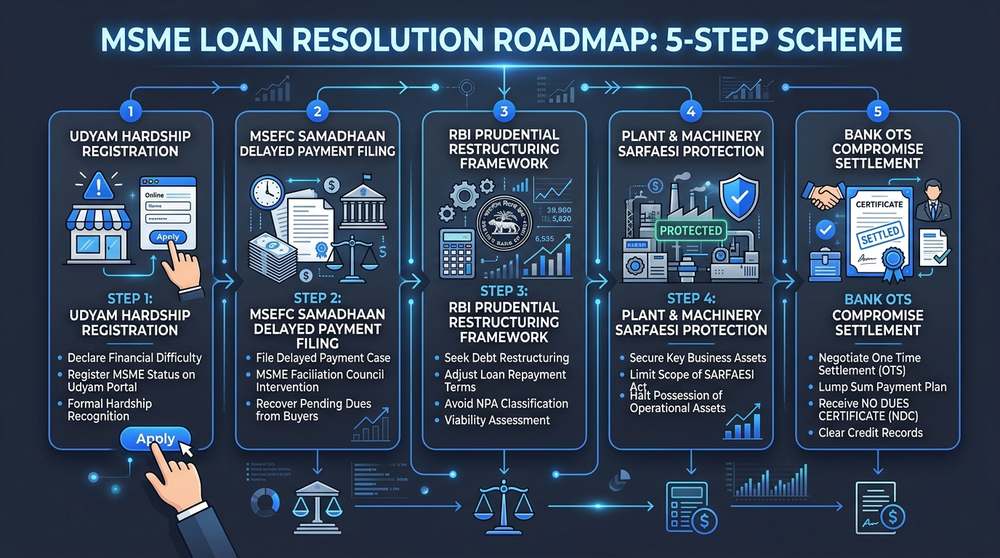
Figure 1: 5-Step MSME Loan Resolution & Asset Protection Roadmap
A clear roadmap showing the transition from Udyam hardship filing to RBI recast, system protection. And final bank OTS execution.
6. Shielding Operational Plant, Machinery
Factory machines, tooling. And plant sheds are vital for business operations. If a bank seizes system, work stops and bank contracts fail. Preserving machine hold is key for MSME debt defense.
When a bank issues Section 13(4) notices or approaches the magistrate under Section 14 to seize assets, owners have clear legal shields:
Section 31(j) SARFAESI & Section 60 CPC Protections for Tools of Trade
Under Section 31(j) of SARFAESI read with Section 60(1)(b) of the CPC, tools of trade and livelihood instruments cannot be seized. For small business owners, customized work machines qualify for protection against summary attachment.
Disproportionate Asset Value vs. Outstanding Claim Challenge
A bank cannot seize a ₹5 Crore factory to recover a ₹60 Lakhs loan. Debt defense lawyers challenge this over-attachment in the DRT. Banks must limit action to proportionate security.
Hypothecated Movable Stock Valuation & Section 13(3A) Procedural Vices
Banks often skip proper physical stock audits before issuing demand notices. Filing formal Section 13(3A) objections highlights these formal errors and stops one-sided physical hold.
Keeping the factory running protects business cash flow during settlement talks. The bank realizes that physical seizure will cause long DRT court delays. This motivates the lender to accept a swift OTS settlement.
7. Strategic Bank OTS Negotiation
Securing a One-Time Settlement requires clear money justification. Bank committees approve settlement settlements only when an OTS offer yields higher Net Present Value (NPV) than forced auctions.
Banks compare an upfront cash offer against the slow outcome of SARFAESI auctions. Plant auctions often fail for lack of buyers. Reserve prices must be cut by 10% to 20%. and DRT court case can last 3 to 7 years.
Expected future auction recovery is discounted against court costs, lawyer fees. And locked capital reserves.
When our lawyers show that a 45% cash OTS gives better net recovery than 5 years in court, the bank&apos. s Zonal Committee has full regulatory justification to approve the settlement.
8. Forensic Audit of Business Loan Sanctions, Penal Interest
Our legal team conducts a forensic audit of your loan statements and sanction letters. Banks often add illegal ledger charges and excessive risk premiums that inflate debt balances by 25% to 40%.
Under the landmark RBI Circular on Fair Lending Practice – Penal Charges in Loan Accounts, banks cannot capitalize penal charges into principal debt. adding penal interest is strictly prohibited.
Essential Forensic Audit Checkpoints for Stressed MSME Facilities
- • Unnotified Rate Markups: unfair hikes in lending rates without contractual notice.
- • Unapplied Interest Stacking: adding of unapplied interest accrued after the NPA status date.
- • Missing Subsidy Credits: Failure to credit government interest subsidies under TUFS, CLCSS. or ECLGS schemes.
- • Excessive Inspection Fees: Unjustified debits for unverified factory inspections and legal fees.
Documenting these accounting errors in a legal reply gives you strong bargaining power. It removes the lender&apos. s leverage and leads to formal OTS sanctions with full penalty waivers.
9. Securing Clean No Dues Certificates (NDC)
Paying the settlement sum is not the final step. Complete solution requires getting a stamped No Dues Certificate (NDC), releasing company asset charges with the ROC. And repairing credit bureau records.
The settlement agreement must mandate four steps: . (1) Full discharge of debtor and backers, . (2) Return of original property title deeds within 30 days, . (3) Filing Form CHG-4 with the ROC to remove charges. and . (4) Updating CIBIL bank to reflect a ₹0 balance.
| Solution Area. | Unresolved Loan Default. | Hostile SARFAESI Auction. | Structured MSME OTS Settlement. |
|---|---|---|---|
| Plant & System Status. | At risk of sudden seizure. | Seized & auctioned at distress value. | Fully protected & working. |
| Total Money Outflow. | 100% principal + compound interest. | Shortfall claim after distress auction. | 40% to 60% negotiated principal payout. |
| Owner Personal Bonds. | Enforceable via DRT & Civil Courts. | Personal assets attached for shortfall. | Permanently discharged & cleared. |
| Court Case Duration. | 3 to 7 years of court battles. | Prolonged DRT challenges & appeals. | Complete closure in 60 to 90 days. |
| bank Credit Status. | Willful Defaulter risk & frozen CIBIL. | Suit Filed / Written Off stigma. | Settled / ₹0 Balance (Path to credit repair). |
| ROC / MCA Charge Status. | Active lien restricting new funds. | Hostile receiver control over assets. | Form CHG-4 filed & clean title restored. |
A ". Settled". tag reflects past money stress. However, a certified ₹0 balance ends legal risk and stops adding interest. Your business can rebuild its bank CIBIL rank over time.
10. SettleLoans MSME Legal Defense
Resolving business debt against harsh banks requires legal and money expertise. SettleLoans halts recovery abuse and asserts Section 31 SARFAESI exemptions. We audit loan ledgers to remove compound penal interest. Our lawyers represent you before bank Stressed Asset branches (SAMB) to secure binding 40% to 60% settlements with clean No Dues Certificates.

Settle Loan is India's trusted debt relief and loan settlement platform. We help borrowers overcome financial distress by negotiating with banks and NBFCs to legally settle personal loans and credit card debts. With our transparent, performance-based approach, you can achieve debt freedom and regain your financial peace of mind.
COMPUTER
11. FAQs: MSME Loan Default & Settlement Process
Clear answers to key questions regarding MSME working capital defaults, MSMED Act protections, system defense. And bank OTS schemes in India.
What is the difference between MSME Samadhaan delayed payment recovery and bank loan settlement?
MSME Samadhaan is a government portal under Section 18 of the MSMED Act, 2006. It helps small suppliers recover unpaid bills. Buyers must clear dues after 45 days. In contrast, bank loan settlement is a direct deal with your lender. Under RBI OTS policies, you settle bad business debt at a discount.
Can a bank seize my factory plant and machinery under SARFAESI if my MSME is registered on Udyam?
Banks cannot seize machines without following strict rules. SARFAESI gives lenders recovery rights. But they must follow legal steps. They must send a Section 13(2) notice. They must reply to your Section 13(3A) objections. RBI rules also require banks to try debt recast first.
How does the RBI Prudential Framework protect stressed MSME borrowers from immediate NPA classification?
Under RBI rules, banks must track early loan stress. They monitor SMA-0, SMA-1. and SMA-2 stages. Lenders must test if the business is viable. They should extend loan tenors or restructure interest before declaring an NPA.
Can an MSME promoter settle a defaulted working capital loan or Cash Credit (CC) limit through an OTS?
Yes. When a Cash Credit or Overdraft turns into an NPA, banks look at settlement settlements. Unsecured debt and old stocks lose value fast. Lenders routinely accept 40% to 60% settlements. They also waive all penal interest.
What legal options exist if a bank rejects an MSME restructuring proposal and issues a Section 13(2) demand notice?
You get 60 days to file objections under Section 13(3A) of SARFAESI. Point out ledger errors, late buyer payments. and RBI rule breaches. The bank must reply within 15 days. If they break rules, you can move the DRT under Section 17.
Does an MSME borrower qualify for exemptions under Section 31 of the SARFAESI Act for operational machinery?
Yes. Section 31 of SARFAESI protects specific assets. It covers farm land and claims under ₹1 Lakh. It also protects key tools of trade under Section 60 of the CPC. Lawyers use these rules to shield factory machines.
How does an MSME One-Time Settlement impact Commercial CIBIL and Company Credit Reports?
After you pay the OTS amount, the bank gives you a No Dues Certificate. Credit bureaus update your status to 'Settled' with a ₹0 balance. This stops negative marks. You can rebuild your business credit score over time.
Can an MSME promoter participate in insolvency resolution or OTS under Section 240A of the IBC?
Yes. Section 240A of the IBC, 2016 gives relief to registered MSME owners. It exempts them from Section 29A curbs. This allows owners to submit revival plans and keep control of their company.
What forensic grounds can MSME borrowers use to dispute excessive compound interest and penal charges?
You can challenge bank claims with compound penal interest. RBI rules ban adding penal charges to principal debt. You can also case missing interest subsidies and sudden rate hikes.
How does SettleLoans help MSME business owners negotiate debt settlements directly with bank zonal committees?
SettleLoans provides full legal defense for stressed MSMEs. We audit loan statements to cut illegal penal charges. We reply to SARFAESI notices. Our lawyers settle with bank Zonal Committees for 40% to 60% debt waivers.