- Co-Extensive Liability: Under Section 128 of the Indian Contract Act, 1872, banks can sue personal guarantors directly. They do not need to finish corporate recovery first.
- Statutory Surety Discharge: Lenders lose claims under Section 133 and Section 139. This happens if they alter loan terms. It also applies if they lose pledged assets without consent.
- Supreme Court Precedent: In *Lalit Kumar Jain v. UOI*, the court held that corporate CIRP does not release guarantors. But independent OTS deals fully clear personal liability.
- Bank Provisioning Rules: Lenders face up to 100% provisioning on bad loans under RBI rules. This balance sheet pressure helps bank committees approve 45% to 65% OTS waivers.
1. The Mechanics of Personal Guarantee Invocation
In India, banks rarely lend on company balance sheets alone. This applies to cash credit (CC) and term loans (WCTL). It also includes overdrafts (OD) and bank guarantees. Lenders routinely demand personal guarantees from directors and partners. When a business defaults, the bank invokes the guarantee.
The main rule is Section 128 of the Indian Contract Act, 1872. Surety liability is co-extensive with the borrower. The Supreme Court upheld this in Bank of Bihar Ltd. v. Damodar Prasad (1969). It reaffirmed it in State Bank of India v. Indexport Registered (1992). The bank can sue the guarantor before selling company assets.
Invocation begins after 90 days of missed payments. The account becomes an NPA. The bank then issues a Loan Recall Notice. It also sends an Invocation Notice. It demands full payment within 15 to 60 days. This puts personal bank accounts and family property at risk. But an invocation notice is not a court decree. You can challenge it with strong legal defenses.
2. Statutory Protections for Personal Guarantors
Banks use standard guarantee forms with broad waiver terms. But Chapter VIII of the Indian Contract Act, 1872 provides strong protections. Lenders often make procedural errors during the loan term. These errors discharge the guarantor under Sections 133 to 141.
Under Section 133, contract changes made without consent discharge the surety. In practice, banks raise interest rates without consent. They also alter credit limits without approval. They often extend loan tenures without new guarantee deeds. These changes void personal liability.
Section 134 discharges the surety if the lender frees the borrower. Section 135 discharges the surety if the bank gives extra time. When banks make internal relief deals without formal consent, guarantees lose legal force.
Section 139 & 141: Loss of Creditor Securities as an Absolute Bar
Section 139 discharges the surety if the lender hurts legal remedies. Under Section 141, a surety holds rights to all creditor security. If the bank loses or neglects pledged assets, the guarantor gets a full or partial discharge.
Check Your Loan Settlement Options
Answer 2 quick questions to evaluate your settlement eligibility.
1. What type of loan do you want to settle?
3. Tribunal Jurisdictions & Judicial Crosswinds
When lenders invoke a guarantee, they act across multiple courts. For claims over ₹20 Lakhs, banks file Section 19 claims in the DRT. If they hold mortgages, they issue Section 13(2) and 13(4) notices under the SARFAESI Act, 2002.
The Insolvency and Bankruptcy Code (IBC), 2016 set new rules for guarantors. In Lalit Kumar Jain v. Union of India (2021), the Supreme Court upheld Section 95 insolvency against promoters. The court held that company CIRP does not clear individual debt.
Guarantors gain vital legal shields under the IBC. Filing under Section 94 or Section 95 triggers an interim moratorium under Section 96. This pauses all DRT suits and asset attachments.
Managing these court actions requires coordinated defense. By filing Section 17 pleas in DRT, your lawyer fights inflated bank claims. This pressure drives the bank toward a realistic One-Time Settlement (OTS).
4. Bank NPA Provisioning & The Haircut Formula
Understanding bank balance sheets helps in settlement talks. Under RBI Prudential Framework rules and Master Directions (2023), banks cannot hold bad debt forever. They must allocate profits to provisioning reserves. This locks up capital.
As bad loans age from Sub-Standard (15% provision) to Doubtful or Loss Asset (100% provision), bank balance sheet pressure grows. Court cases in DRT and NCLT take 5 to 8 years. Over time, asset values drop, legal costs rise. And recovery values fall.
Here, Realizable_Value is the distressed auction price of attached assets. The rate r is the bank's cost of capital. Deductions cover court delays, legal costs. And locked capital.
When a guarantor makes an upfront cash settlement offer through counsel, the bank evaluates it against prolonged litigation costs. If the cash offer beats court recovery, the bank approves a 45% to 65% debt haircut under RBI rules.
5. Visual Resolution Blueprint
Defending a personal guarantee follows clear steps. It moves from notice audit to DRT defense, hardship proof, and OTS closing. The graphic below illustrates the complete roadmap to protect personal wealth and clear business debt.
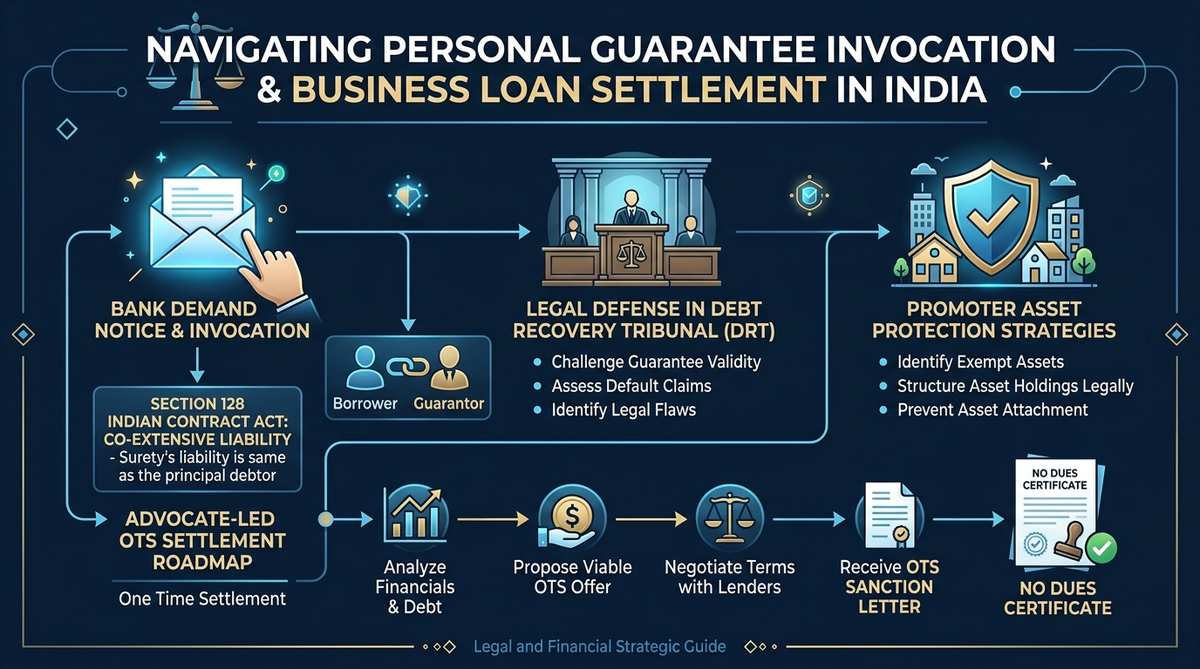
Figure 1.0: Statutory defense and One-Time Settlement workflow for invoked personal guarantees under Section 128 and RBI directions.
6. Strategic Advocate Negotiation
Negotiating a personal guarantee alone is risky. Recovery agents often exploit distress. They demand cheques that harm your legal defense. Experienced debt defense advocates protect personal assets through structured legal counsel.
talks begin with a formal compromise dossier. Your advocate shows the default was genuine business loss. This is crucial under RBI Wilful Defaulter rules. It protects promoters from criminal complaints under Sections 406 and 420 IPC.
Next, counsel uses statutory asset protections. Under Section 60 CPC, specific personal assets are exempt from attachment. These include basic tools and MWPA policies. Showing banks that recovery is limited reduces their leverage.
During committee talks, advocates point out legal flaws. These include expired limitation periods and unapproved terms under Section 133. This helps secure a deep discount or a flexible payment plan.
7. Sanction Letter Forensics
An OTS is only as safe as the sanction letter. Never pay money on verbal assurances or emails. Flawed letters let banks credit funds to interest while keeping guarantees active or assigning debt to ARCs.
A valid OTS letter must be on bank letterhead. It must have proper signatures and four mandatory terms:
Explicit Guarantor Discharge Clause
The letter must name the guarantor. It must confirm that full payment cancels the Deed of Guarantee.
Mandatory Case Withdrawal Undertaking
The lender must withdraw all Section 19 DRT claims, Section 95 IBC cases, and Section 138 NI Act complaints within 15 to 30 days.
Release of Title Deeds & Charge Satisfaction
The bank must return original deeds and file Form CHG-4 with ROC and CERSAI.
Ban on Debt Assignment to ARCs
The letter must bar the bank from assigning written-off debt to an ARC.
Before paying the first installment, legal counsel checks the letter to remove clawback terms. This ensures full compliance with RBI master directives.
8. Payment Protocols & No Dues Certificate
Always pay settlement amounts through official banking channels. Use RTGS, NEFT, or Demand Drafts directly into the loan account. Never pay unverified third parties.
After final payment, the lender must provide a No Dues Certificate (NDC). Under RBI Circular RBI/2023-24/60, lenders must return all original documents within 30 calendar days. Delays beyond 30 days carry a fine of ₹5,000 per day paid to the guarantor.
Finally, the lender updates credit bureaus like CIBIL to "Settled". with a ₹0 balance. This causes a brief score dip of 75 to 150 points. But it clears bad remarks so you can rebuild a 750+ score.
9. Personal Guarantee Resolution Matrix
Promoters face several legal routes. Comparing tribunal defense, insolvency, and OTS helps protect your wealth and business.
| Resolution Pathway. | Applicable Law / Forum. | Legal Timeline. | Promoter Asset Risk. | Haircut / Waiver Potential. |
|---|---|---|---|---|
| DRT Litigation Defense. | Section 19 RDBA / DRT. | 4 to 7 Years. | High (Attachment / Auction Orders). | None (Court decrees 100% + interest). |
| Personal Insolvency. | Section 95 IBC / NCLT. | 2 to 4 Years. | Severe (Estate controlled by RP). | Decided by Creditors Committee. |
| SARFAESI Securitisation Application. | Section 17 SARFAESI / DRT. | 2 to 5 Years. | Critical (Physical Property Eviction). | Procedural stay only. no debt waiver. |
| Advocate-Led OTS Compromise. | RBI Master Directions / Contract Act. | 3 to 6 Months. | Zero (Full Release &. Title Return). | 45% to 65% Principal Haircut. |
Court cases bring delay. Only an advocate-led OTS settlement gives total freedom with high debt waivers.
10. SettleLoans Legal Defense & Commercial Debt Advisory
SettleLoans helps promoters, MSME directors. And guarantors resolve commercial debt. When lenders invoke guarantees under Section 128, our advocates lead your defense.
We review loan files for illegal changes under Section 133 and lapses under Section 139. We coordinate multi-court defense in DRT, NCLT, and High Courts. We also negotiate directly with bank zonal committees under RBI rules.
We combine legal defense with smart negotiation. SettleLoans helps promoters clear debt, secure 45% to 65% waivers. And cancel personal guarantee deeds.

Settle Loan is India's trusted debt relief and loan settlement platform. We help borrowers overcome financial distress by negotiating with banks and NBFCs to legally settle personal loans and credit card debts. With our transparent, performance-based approach, you can achieve debt freedom and regain your financial peace of mind.
COMPUTER
11. FAQs: Personal Guarantee Invocation & Settlement
What is personal guarantee invocation for a business loan in India?
Personal guarantee invocation is a formal legal demand under Section 128 of the Indian Contract Act, 1872. It asks a guarantor to pay company debt. Guarantor liability is co-extensive with the borrower. The bank can pursue personal assets directly.
Can a bank seize a promoter's personal assets when a company defaults?
A bank cannot seize assets overnight. It must follow legal steps. It sends a notice under Section 128. Above ₹20 Lakhs, it files in DRT under Section 19. Or it files in NCLT under Section 95. Promoters can fight back using defenses under Sections 133 to 141.
What are the legal defenses available to a personal guarantor under the Indian Contract Act?
Guarantors have strong statutory defenses. Section 133 discharges liability if loan terms change without consent. Section 134 discharges the surety if the debtor is released. Section 135 gives discharge if the bank grants extra time. Section 139 applies if the lender harms legal remedies. Section 141 gives discharge if security is lost.
How does the Supreme Court ruling in Lalit Kumar Jain v. Union of India affect personal guarantors?
In Lalit Kumar Jain v. Union of India (2021), the Supreme Court ruled on guarantees. It held that corporate CIRP does not clear personal guarantors. Lenders can still sue under Section 95 IBC or in DRT. Negotiating an OTS is vital to secure an individual release.
Can an invoked personal guarantee be settled through a One-Time Settlement (OTS)?
Yes. Banks settle guarantees through One-Time Settlement (OTS) under RBI rules. DRT and NCLT cases take 5 to 8 years. Because recovery is slow, lenders accept settlement deals with 45% to 65% debt waivers.
What is the difference between Corporate Moratorium (Section 14) and Personal Moratorium (Section 96)?
Section 14 IBC protects only company assets. But Section 96 IBC gives an interim stay for personal guarantors. It pauses all ongoing lawsuits and debt collection against personal assets.
What essential clauses must be included in a personal guarantee OTS Sanction Letter?
A valid OTS letter must have key terms: (1) Full discharge of the guarantor. (2) Return of original title deeds and guarantee papers. (3) Withdrawal of DRT Section 19, NCLT Section 95, and Section 138 NI Act cases. (4) Total waiver of penal interest. (5) A ban on selling debt to ARCs.
How does personal guarantee settlement impact commercial and individual CIBIL scores?
After full OTS payment, the bank marks the account as 'Settled&apos. with a ₹0 balance in CIBIL. Your score drops briefly by 75 to 150 points. But it clears court tags and lets you rebuild a 750+ score in 18 to 24 months.
What is the statutory penalty if a bank delays releasing personal property documents after settlement?
Under RBI Circular RBI/2023-24/60, lenders must return all original property deeds and issue an NDC within 30 days. If the bank delays beyond 30 days, it must pay payout of ₹5,000 per day of delay.
Can a bank declare a personal guarantor a Wilful Defaulter?
Under RBI rules, a bank cannot declare a guarantor a wilful defaulter for simple business failure. It must prove intentional fraud or fund diversion. If a lender sends an unfair notice, counsel can challenge it before the High Court.