
1. RBI Guidelines on Loan Settlement
Navigating a financial crisis is immensely stressful, and dealing directly with aggressive bank collection departments often exacerbates the trauma. When people default on unsecured personal loans, lenders deploy recovery agents whose tactics can blur the line between collection and harassment. Professional personal loan settlement services step in as a crucial buffer between the distressed borrower and the lending institution.
2. Reasons to Hire Professional Negotiators
By employing seasoned financial advisors and legal advocates, these services leverage institutional knowledge that the average consumer lacks. They understand precisely what percentage of the principal amount banks are realistically willing to accept based on the age of the non-performing asset (NPA), the bank's internal policies, and current market conditions.
Expert talks Leverage: Financial institutions are far more likely to agree to a 50%+ principal reduction when dealing with a specialized legal agent.
Harassment Shield: Once hired, legal advocates formally request all notices be routed through them, effectively silencing recovery calls.
Protection from Litigation: Firms monitor for potential civil suits or cheque bounce cases under Section 138 of the NI Act, ensuring prompt countermeasures.
records & NOC: Ensures that the bank issues a legally binding No Objection Certificate (NOC), permanently closing the debt.
3. Comparison of Legal Remedies
Choosing the right strategy for your debt is crucial. Below is a comparison of different approaches to managing severe loan default:
| Strategy | Impact on Debt | CIBIL Impact |
|---|---|---|
| Professional Settlement | Reduces debt by up to 50-70% legally. | Marked as 'Settled' (Negative but resolves liability). |
| Full Repayment | Pays 100% of principal + interest + penalties. | Marked as 'Closed' (Positive impact). |
| Ignoring Debt | Debt balloons with extreme compound interest. | Marked as 'Written Off' (Severe damage). |
4. Step-by-Step Notice Process
Engaging a professional debt resolution agency involves a structured, legally sound process designed to maximize debt reduction and ensure permanent closure of the liability.
Engage a Legal agent
Hire a specialized debt advocate who will analyze your loan agreement, statement of accounts, and current financial hardship.
Draft the Cease and Desist Notice
Your lawyer drafts a formal notice demanding an immediate halt to third-party recovery harassment under RBI and Supreme Court guidelines.
Dispatch via Registered Post
The legal notice is sent via India Post with Acknowledgment Due (RPAD) directly to the bank's grievance officer and registered headquarters.
Negotiate the Settlement Amount
Once the bank's legal team responds, your advocate begins formal talks to waive off penalties and reduce the principal outstanding.
Secure the Official NOC
After the final agreed sum is paid, the bank must issue a legally binding No Objection Certificate, formally closing the loan account.
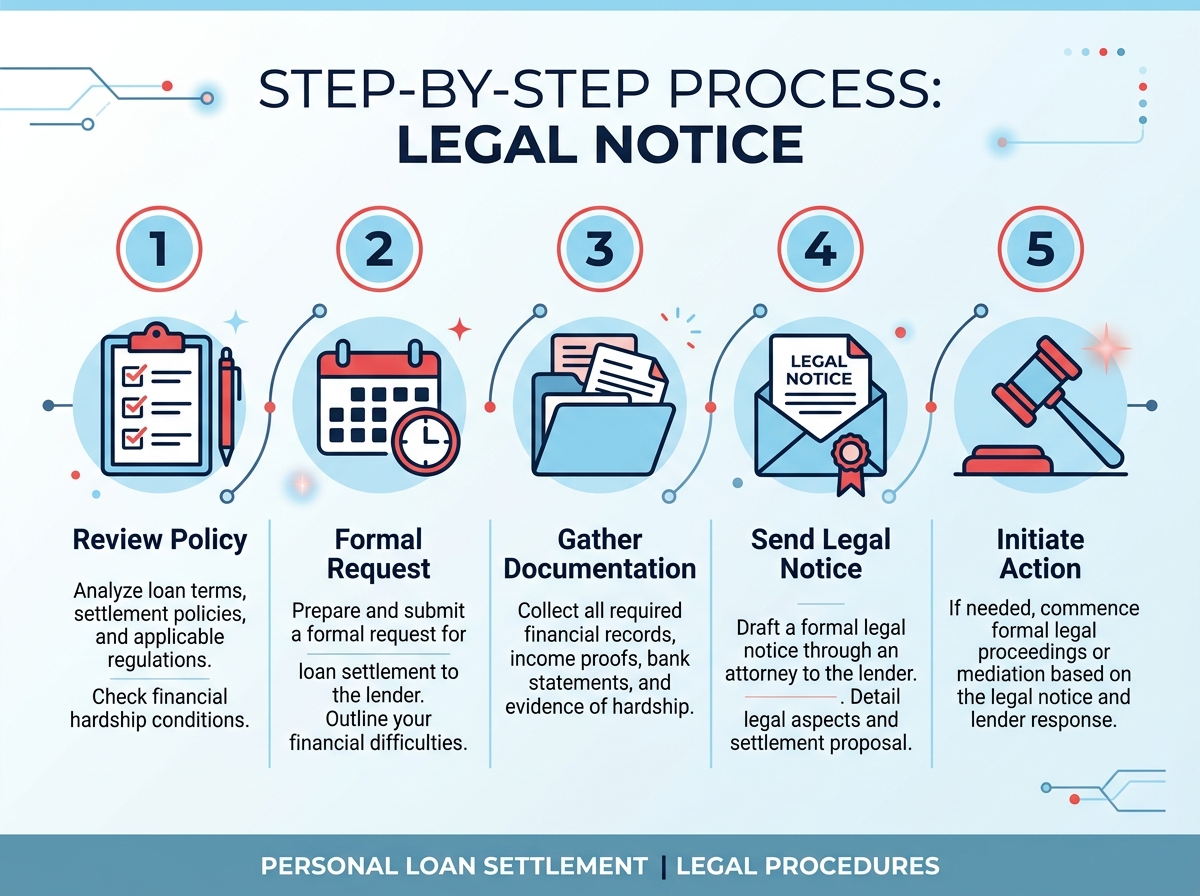
A poorly drafted notice is easily ignored by corporate legal teams. To exert maximum pressure on a bank, the legal intervention must contain specific statutory elements and clear demands.
5. Essential Settlement Elements
The primary concern for people considering personal loan settlement services is the associated cost. Most reputable firms operate on a success-fee model. This means their relief is a calculated percentage of the total debt amount they successfully eliminate. For instance, if you owe ₹10,00,000 and the agency negotiates a settlement at ₹4,00,000, their fee is based on the ₹6,00,000 saved.
6. Resolution Timeline & Escalation
One of the most critical advantages of hiring a settlement firm is immediate legal protection. The Reserve Bank of India has established stringent guidelines governing the conduct of recovery agents. Unfortunately, third-party collection agencies routinely violate these regulations through public shaming, calling family members, or visiting workplaces unannounced. If you face this, filing a recovery agent harassment complaint is a viable next step.