
1. Understanding the Debt Settlement Industry
Defaulting on unsecured debt, such as personal loans and credit cards, often plunges borrowers into a terrifying cycle of compounding interest and aggressive recovery tactics. Banks and NBFCs deploy relentless collection departments designed to pressure you into paying. In these scenarios, debt settlement emerges as a practical alternative: negotiating a single lump-sum payment that is significantly less than the total outstanding balance, allowing you to close the account forever. However, the Indian debt relief industry includes both genuine legal advocates and fraudulent operators, making the choice of the right settlement firm a critical decision.
The core principle of debt settlement relies on leverage. When a loan becomes a Non-Performing Asset (NPA), the bank recognizes the high risk of a total loss or the exorbitant cost of civil litigation. A professional settlement firm, backed by legal expertise, leverages this reality to negotiate waivers on penalties, interest, and even a large portion of the principal.
2. How Top Companies Operate
A top-tier settlement agency acts as your legal shield. When you sign a Power of Attorney (POA) or authorization letter with a reputable firm, a highly structured process begins to isolate you from harassment and build the capital required to secure your settlement.
Legal Intervention & Shielding: Expert agencies immediately issue cease-and-desist notices to lenders, enforcing RBI’s Fair Practices Code and stopping illegal recovery agent harassment.
The Escrow Mechanism: Instead of paying the bank directly, you deposit a manageable monthly amount into a secure, RBI-compliant escrow or trust account that you control to build your settlement fund.
Strategic Defaulting: While it sounds risky, prolonged non-payment forces the loan into NPA status, which is exactly when banks become open to heavy settlement negotiations.
Aggressive Negotiation: Once sufficient funds accumulate in your escrow, the agency formally approaches the creditor’s settlement department to strike a heavily discounted deal.
3. Identifying Legitimacy & Red Flags
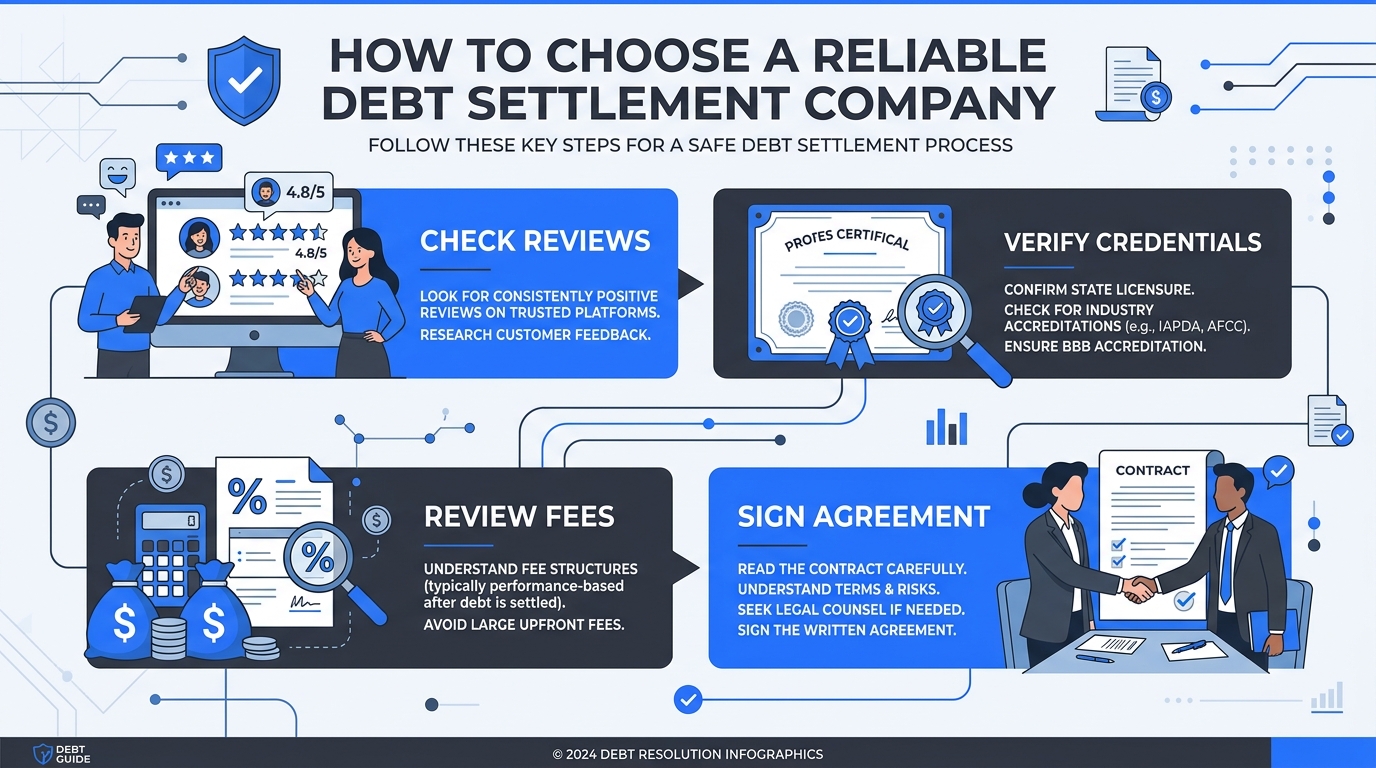
The Reserve Bank of India (RBI) and the Banking Ombudsman continuously warn consumers about fraudulent debt relief schemes. Identifying a legitimate agency requires evaluating their legal grounding and fee transparency.
The Ultimate Red Flag: Illegal Upfront Fees. According to prevailing consumer protection standards and fair practice laws, it is highly unethical for a debt settlement firm to demand a massive upfront fee before rendering any concrete negotiation service. While small legal drafting fees (for sending notices) are acceptable, any company demanding lakhs of rupees before reaching a settlement with the bank is likely a scam.
| Indicator | Legitimate Companies | Predatory Scams |
|---|---|---|
| Fee Structure | Performance-based success fee upon closure. | Demands large upfront fees or monthly retainers. |
| Guarantees | No guarantees. Explains the risk of litigation realistically. | Promises a specific settlement percentage unconditionally. |
| Credit Impact | Clearly discloses severe negative impact on CIBIL. | Claims the process won't hurt your CIBIL or will "repair" it. |
| Communication | Sends formal legal notices to banks to handle communications. | Tells you to simply change your SIM card and hide. |
4. Demystifying Fee Structures
When you hire a settlement company, their compensation must be completely transparent in the Service Agreement. The standard model operates on a contingency or success fee basis. This is typically calculated in one of two ways:
- Percentage of Enrolled Debt: The agency charges a flat percentage (usually between 10% to 15%) of the total outstanding loan amount at the time of enrollment.
- Percentage of Debt Saved: The agency charges a higher percentage (often around 20% to 30%) but strictly calculated on the amount they save you. For instance, if a ₹5,00,000 debt is settled for ₹2,00,000, the fee applies to the ₹3,00,000 they saved you.
While these fees are significant, they are vastly outweighed by the savings achieved by waiving off compounding interest, bounce charges, and penal interest that accumulate daily on a defaulted loan.
5. Step-by-Step Selection Guide
Partnering with the right firm ensures that you get out of debt faster, with your legal rights fully protected.
Verify Legal Representation
Ensure the company utilizes advocates registered with the Bar Council of India (BCI) who can legally draft and serve notices on your behalf.
Scrutinize Online Reviews Thoroughly
Look beyond Google ratings. Search consumer forums for unbiased accounts to see how the company responds to complicated litigation or aggressive banks.
Assess the Escrow Setup
The funds you save monthly must be stored in a dedicated, RBI-regulated nodal account or trust that the settlement firm cannot access without your signature.
Demand a Thorough Contract Review
Read the fine print. Ensure that the agreement clearly states that fees are only owed upon the successful generation of a No Objection Certificate (NOC) from the bank.
6. Legal Ramifications & CIBIL Impact
You must enter the settlement process fully aware of the consequences. Settling a loan implies that you did not fulfill the original terms of the contract. Once a settlement is executed and the NOC is issued, the lender will report the account to credit bureaus (like CIBIL, Experian, Equifax) as "Settled" or "Post Write-off Settled."
This status severely drops your credit score and will act as a major red flag for future lenders for up to seven years. However, a "Settled" status is vastly preferable to an open, unpaid "NPA" or "Written-off" status, which permanently locks you out of the financial system and carries the constant threat of civil lawsuits or Section 138 cheque bounce cases.
7. Alternatives to Settlement
Debt settlement is a drastic step designed for severe financial hardship. Consider these alternatives first:
- Loan Restructuring: Approaching the bank directly to ask for an extended tenure or a lower interest rate. This keeps your CIBIL intact but rarely reduces the principal balance.
- Debt Consolidation Loans: Taking a single, lower-interest loan to pay off multiple high-interest credit cards and personal loans, streamlining your EMIs into one payment.
- Insolvency & Bankruptcy: Under the Insolvency and Bankruptcy Code (IBC) in India, individuals with zero capacity to pay can file for insolvency, legally wiping out unsecured debts, though it completely destroys creditworthiness for years.
8. DIY vs Professional Agencies
Many consumers consider negotiating with banks directly to save on agency fees. DIY settlement is entirely legal. If you possess excellent negotiation skills, understand banking terminology, and have the emotional resilience to endure abusive recovery agents, you can settle on your own.
However, banks train their recovery managers to extract maximum money. A professional advocate possesses institutional leverage—they know exactly when a bank’s internal cost-benefit analysis favors a 50% write-off versus a drawn-out civil suit. Furthermore, hiring an agency immediately provides a legal buffer, forcing the bank to route all communications through your lawyer, instantly ending the harassment.